

LOCAL EDUCATION PROGRAMS ON CLIMATE AND ENVIRONMENTAL SUSTAINABILITY
1.
Overview of the Program
The
National Research University TIIAME is one of the leading institutions in
Uzbekistan that integrates environmental protection, climate education, and sustainable
development into higher education. The university plays an important role in
preparing specialists who are equipped with modern knowledge to address
environmental challenges and climate-related issues at national and regional
levels.

The Faculty of
Ecology and Law at TIIAME National Research University is the
main academic unit responsible for training specialists in environmental
protection and promoting knowledge on climate change, ecological safety, and
sustainable natural resource use. Through modern study programs, the faculty
ensures that students develop both theoretical knowledge and practical skills
needed to address current environmental challenges.
Faculty page: https://tiiame.uz/faculties/faculties?id=2
The academic focus of the faculty is aimed
at developing scientific, legal, and managerial competencies. Students learn to
apply national and international environmental laws, conduct Environmental
Impact Assessments (EIA), perform environmental
monitoring of air, water, and soil quality, and manage natural
resources sustainably. They also study climate change impacts and develop
adaptation and mitigation strategies.
Students receive extensive training in the
following areas:
|
Core Focus Areas |
Description |
|
Environmental Legislation and
Policy |
Understanding and applying national and international environmental
laws. |
|
Environmental Impact Assessment
(EIA) |
Evaluating the environmental consequences of development projects and
proposing mitigation measures. |
|
Environmental Monitoring |
Collecting and analyzing environmental data (air, water, soil
quality). |
|
Ecological and Natural Resource Management |
Sustainable use of water, land, and biological resources. |
|
Climate Change and Adaptation Strategies |
Studying climate risks and developing adaptation and mitigation
strategies. |
The curriculum is designed according to modern international standards and incorporates innovative teaching methodologies. Competency-based learning is aligned with the principles of SDG-13 (Climate Action), ensuring that students understand global climate priorities. The use of GIS technologies, remote sensing, and digital environmental tools enables students to monitor environmental changes and make data-based decisions. Project-based learning allows them to work on real case studies, while interdisciplinary courses introduce concepts in water resources sustainability, environmental economics, disaster risk reduction, and climate resilience. This approach helps students understand the complex interactions between the environment, society, and the economy.

Graduates are well-prepared for careers in
governmental environmental agencies, water and land management organizations,
climate and disaster risk reduction projects, international sustainability
institutions, and research laboratories. The program equips young professionals
to contribute effectively to climate action and sustainable development at
national and global levels.
For additional information on programs and
admissions: https://tiiame.uz/faculties/faculties?id=2
CLIMWATER PROJECT
The ClimWater project is an international research initiative led by TIIAME National Research University in collaboration with leading scientific institutions in Germany. The project focuses on assessing how climate change affects Uzbekistan’s water resources and evaluating its consequences for agriculture and the water sector. It aims to strengthen scientific cooperation, improve climate-related data analysis, and support informed decision-making on water management.

🔗 Project link (https://www.cawa-project.net/https://www.cawa-project.net/)
The project unites multiple key
institutions and researchers, including GFZ German Research Centre for
Geosciences (Dr. Abror Gʻofurov), TIIAME-NRU (Prof. Abdulhakim Salohiddinov),
Humboldt University of Berlin (Prof. Tobias Sauter and Phillip Shuster), UFZ
Helmholtz Centre for Environmental Research (Dr. Stefan Geyer), National
University of Uzbekistan (Dr. Gʻulomjon Umurzoqov), Uzhydromet and NIGMI (Dr.
Fayzulla Agzamov), as well as the TIIAME Innovations and Scientific Research
Cluster (Mr. Ezoz Ozodov). This strong network ensures scientific depth and
interdisciplinary knowledge exchange.
Within the
project, researchers study climate impacts on surface and groundwater
resources, analyze historical hydrometeorological data, and conduct
hydrological and climate modeling to forecast future water availability up to
the end of the 21st century. The project also focuses on capacity building
through training programs, workshops, and short-term academic exchanges for
young Uzbek researchers in Germany.
The project
involves key partners, including GFZ German Research Centre for Geosciences,
Humboldt University of Berlin, UFZ Leipzig, the National University of
Uzbekistan, Uzhydromet/NIGMI, and the TIIAME Innovation and Scientific Research
Cluster. The expected outcomes include improved understanding of climate
impacts, support for sustainable water and agricultural planning, and
contribution to SDG 6 (Clean Water and Sanitation) and SDG 13
(Climate Action).
YOUNG SCIENTIST SCHOOL 2024
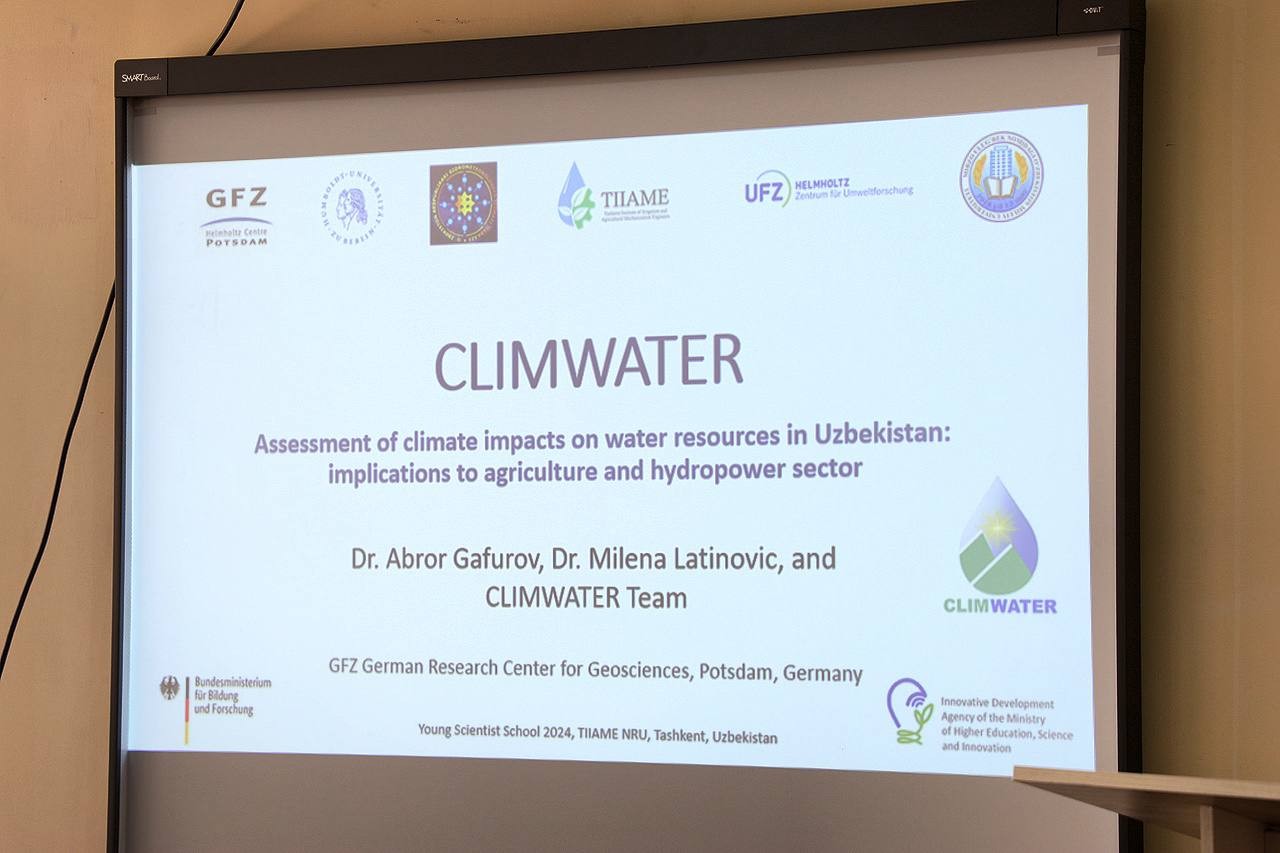
The Young Scientist School 2024 took place on 29–31 July 2024 at the Tashkent Institute of Irrigation and Agricultural Mechanization Engineers – National Research University (TIIAME-NRU) in Tashkent, Uzbekistan. The event was organized within the framework of the German–Uzbek international project CLIMWATER (https://www.cawa-project.net/ ), which focuses on assessing climate change impacts on water resources. The school brought together young researchers from different universities and research organizations to improve their knowledge in hydrology, climate science, and water-resource management (https://tiiame.uz/news?id=6674).
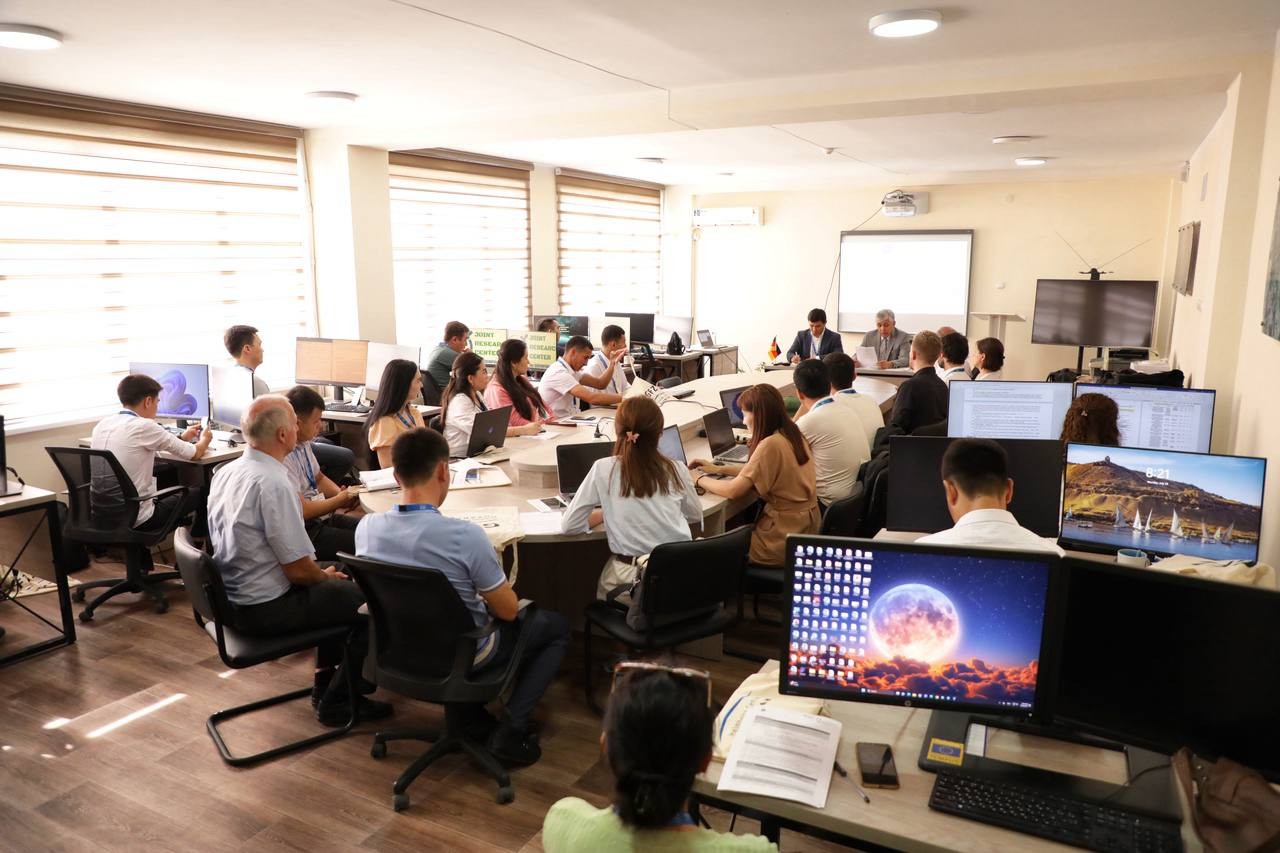
During the three-day program, participants received theoretical and
practical training in climate modeling, groundwater assessment, and the use of GIS and
remote sensing tools for water monitoring. The sessions
included lectures, data analysis exercises, and hands-on work with hydrological
models. Training was delivered by experts from leading institutions including
the GFZ
German Research Centre for Geosciences, UFZ Leipzig,
Humboldt
University of Berlin, and the National University of Uzbekistan.
Around 15 young scientists took part in the program.
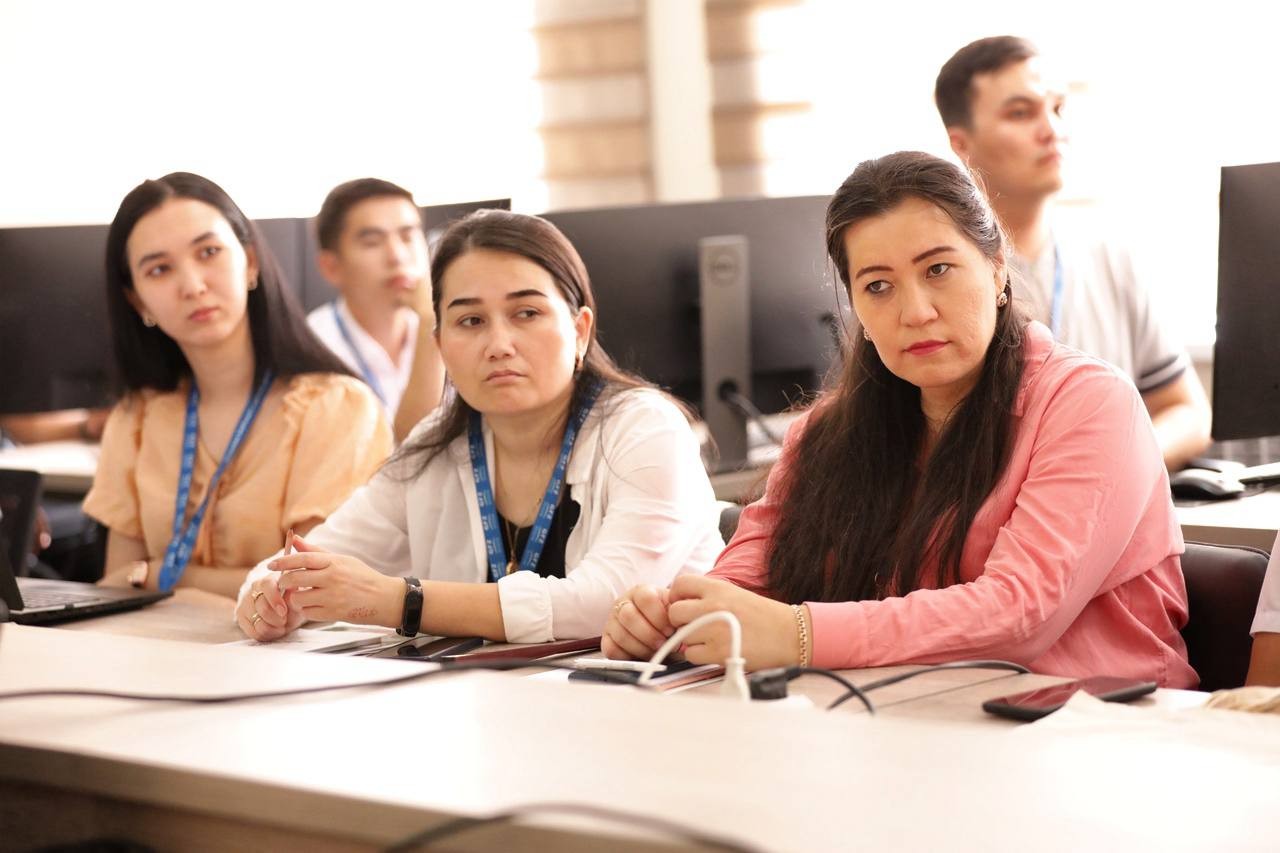
The main goal of the Young Scientist School was to strengthen research capacity and foster scientific cooperation between Uzbekistan and Germany. The event provided early-career researchers with practical skills, access to modern research methodologies, and opportunities for networking with international experts. The knowledge gained will contribute to better understanding climate-related risks and developing sustainable water management strategies for Uzbekistan.

Source: https://www.cawa-project.net/news-detail/news/the-young-scientist-school-2024/
The project
strengthens Uzbekistan’s capacity to respond to climate challenges through
research, knowledge sharing, and training of future experts.
INTERNATIONAL CONFERENCES AND SCIENTIFIC
ACTIVITIES SUPPORTING SDG 13 (CLIMATE ACTION)
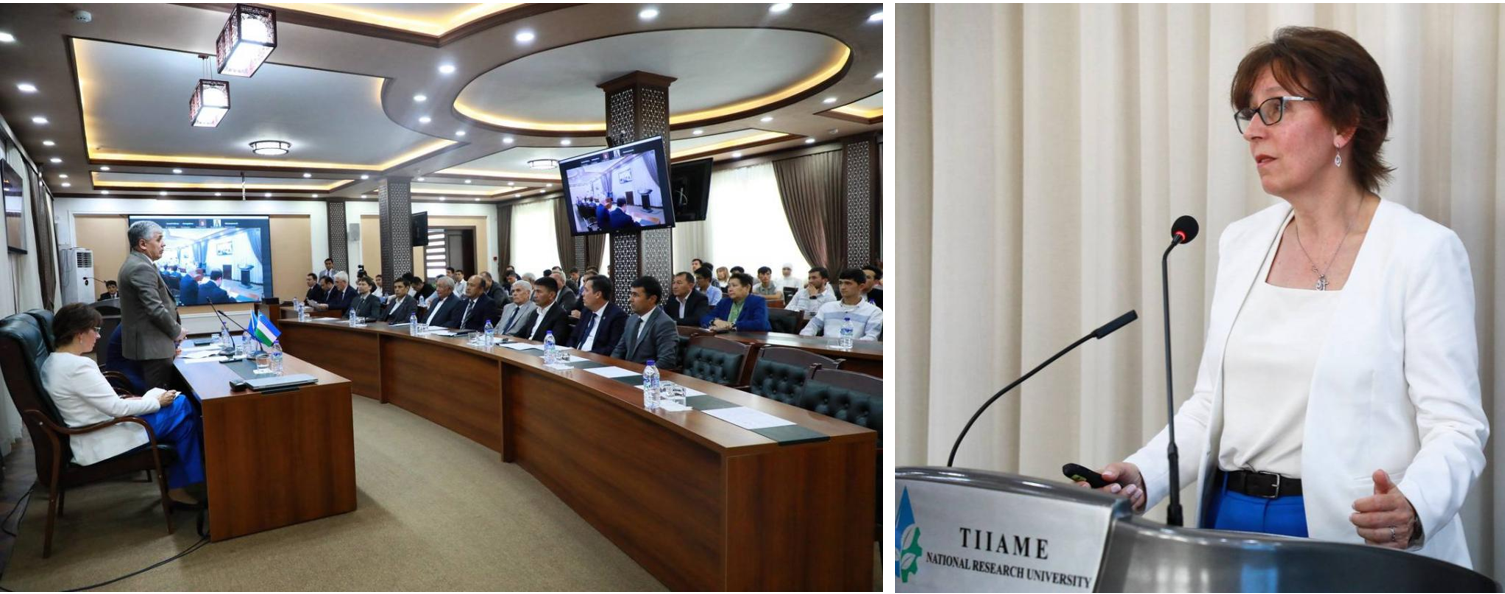
TIIAME National Research University actively contributes to SDG 13 – Climate Action by organizing regular international conferences, scientific forums, and thematic events that address climate change, sustainable use of natural resources, and environmental protection. These events bring together scientists, policymakers, practitioners, and students from Uzbekistan and abroad, creating a platform for knowledge exchange and promoting climate-focused research and education. Through such initiatives, the university integrates real global challenges into the learning process and enhances the scientific capacity of young specialists.
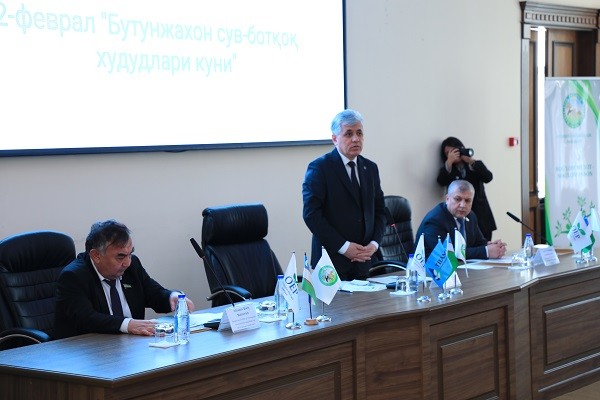
In 2024, the university held several notable events relevant to SDG 13. On February 2, 2024, TIIAME-NRU hosted an international scientific meeting dedicated to World Wetlands Day(https://tiiame.uz/news?id=5500 ), where experts discussed water conservation, efficient irrigation, climate impacts on wetland ecosystems, and the importance of Ramsar Convention wetlands. Likewise, on April 22, 2024, the university organized the international event SusLand-2024 Earth day (https://tiiame.uz/news?id=6153 ) focused on land management, cadaster systems, and sustainable resource use. Both events included scientific presentations, expert discussions, and active participation of students, demonstrating how research results are transferred into practice.

Through these
international activities, TIIAME-NRU not only raises awareness of climate
change and sustainability challenges but also strengthens the connection
between science, education, and policy. The outcomes of these events directly
support environmental education, provide practical learning opportunities, and
contribute to the preparation of future specialists capable of addressing
climate-related issues at the national and regional levels.
COLLABORATION WITH PARTNER SCHOOLS: EDUCATIONAL
SUPPORT AND OUTREACH INITIATIVES
TIIAME National Research University regularly conducts
educational outreach activities in its partner schools as part of its
commitment to strengthening the connection between higher and secondary
education. University lecturers organize open lessons, thematic workshops,
competitions, and motivational sessions to increase students’ interest in
science, ecology, climate change, water management, and engineering. By
bringing university-level expertise directly into the school environment,
students are introduced to modern teaching methods, interactive learning
formats, and real-world examples, supporting SDG-4 (Quality Education) and
SDG-13 (Climate Action).
Academic Competition and Motivation Workshop
On 31 January 2024, a second outreach activity was held, where university faculty organized a student competition and motivation workshop. https://tiiame.uz/news?id=5470
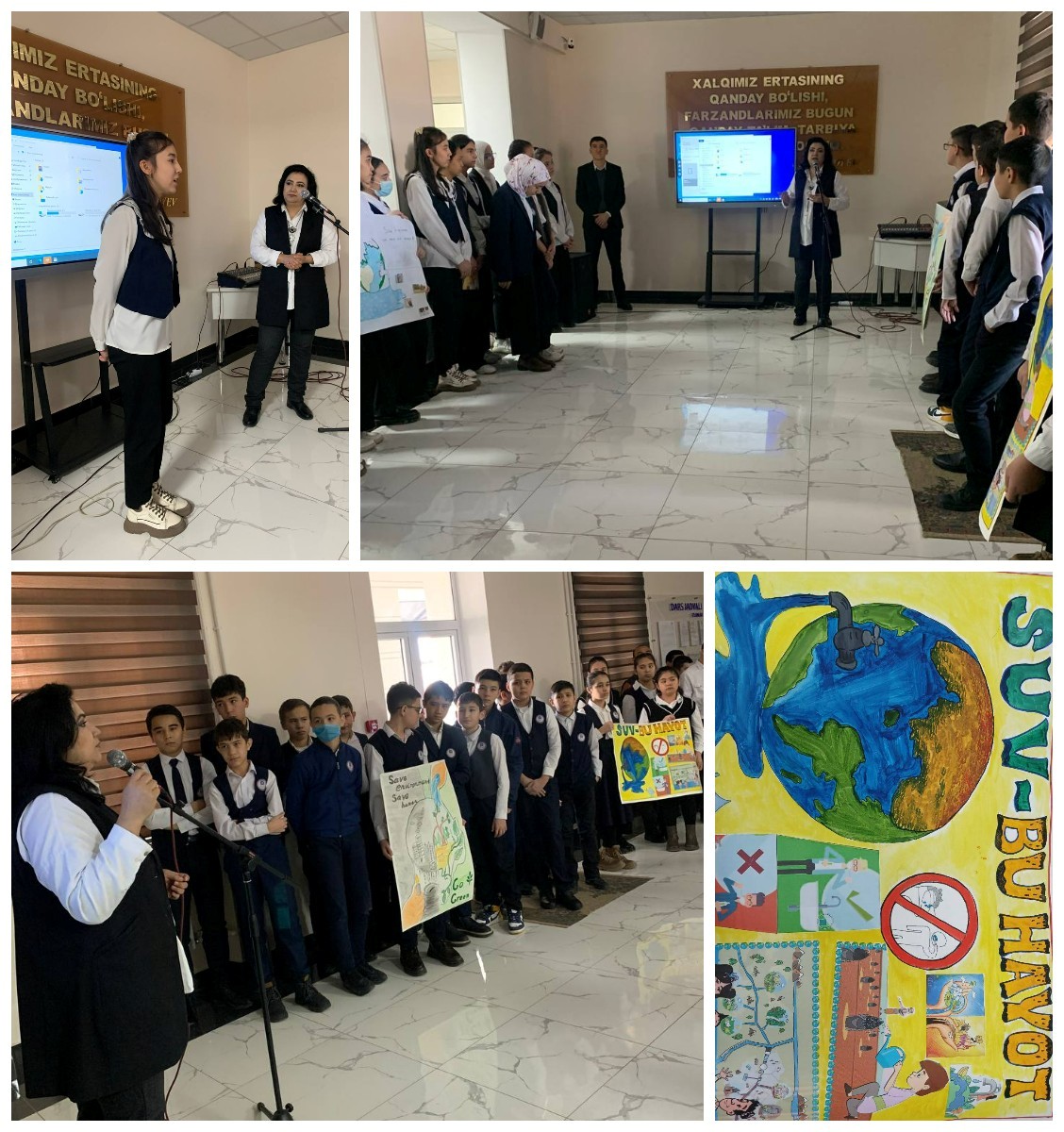
During this event, students participated in quizzes
and team tasks related to environmental and scientific topics. The workshop
also included discussions about future career opportunities and university
programs. High-performing students received certificates and recognition,
encouraging their academic confidence and interest in STEM and environmental
fields.
Open Lesson and Interactive
Educational Session
On 27 January 2024, university
lecturers conducted an interactive educational session in one of the assigned
partner schools https://tiiame.uz/news?id=5444
During this event, professors delivered a practical
open lesson focused on scientific and ecological knowledge. Students took part
in discussions, observed demonstrations, and explored how modern technologies
and sustainable practices are applied in agriculture, irrigation, and natural
resource management. The session helped students develop curiosity, analytical
thinking, and motivation toward scientific fields.

TIIAME National Research University demonstrates a
strong institutional commitment to climate and environmental sustainability
through an integrated approach that combines education, research, and community
engagement. Local education programs provide students with modern environmental
knowledge and practical competencies, while international initiatives—such as
the ClimWater project—advance scientific understanding of climate impacts on
water resources and strengthen global research collaboration. Regular
international conferences and thematic events held at the university encourage
scientific dialogue and raise climate awareness, and continuous outreach
activities in partner schools help promote climate literacy at earlier stages
of education. Together, these efforts contribute significantly to developing
environmentally responsible specialists and support the implementation of SDG 4
(Quality Education) and SDG 13 (Climate Action) at local, national, and
international levels.