

Water reuse measurement
At
TIIAME National Research University, water reuse is not only practiced but also
systematically measured. The university maintains a campus water balance
in which water purchased from the municipal drinking-water network is distinguished
from water supplied by on-site rainwater harvesting and reuse systems. This
allows the contribution of reused water to be expressed both as an absolute
volume and as a proportion of total campus water consumption.
The
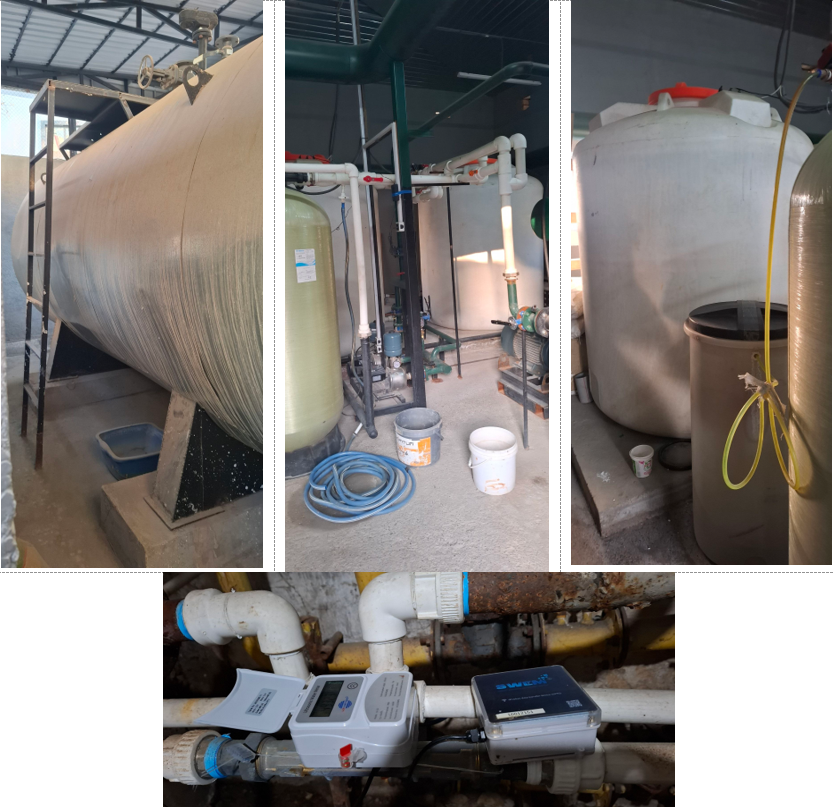
rainwater storage tanks are equipped with level indicators and are connected to
pumps with known operating capacities. Technical staff periodically record tank
levels, pump running hours and refill events. Using these data, the volume of
non-potable water supplied each month from the tanks to irrigation networks,
fountains and hydraulics laboratory installations is estimated. In parallel,
the main inlet meters on the buildings measure the volume of potable water
drawn from the city network. By comparing these two data streams, the
university can determine what share of overall demand is covered by reused
rainwater rather than by treated drinking water.
Based
on records for 2024, it is estimated that approximately 15% of the campus’s
total annual water demand was covered by harvested and reused rainwater.
For certain end-uses, the contribution is even higher: during the main growing
season, around 40% of the water used for irrigating lawns and green areas
was provided from the rainwater tanks instead of the municipal supply. These figures
are compiled into internal monitoring tables that summarise, for each year, the
quantities of reused water and their percentage share in relevant applications.
The monitoring data are reviewed by the university’s technical services and the Green Campus working group. Where unusual patterns are observed—such as a sudden decrease in reused volumes or an unexpected rise in potable water use—additional checks are carried out to identify possible leaks, equipment faults or operational issues. The same measurement results are reported to university management and form part of TIIAME’s evidence for SDG 6.4.2, demonstrating that the institution not only promotes water reuse in principle, but also tracks and quantifies the amount of water that is actually being reused on campus over time.
Selected
2024–2025 evidence of outreach & engagement (public links)
Explaining
incentives for metered and water-efficient use of water resources
On
23 December 2024, a TIIAME NRU news item presented new national tax incentives
for farmers who adopt water-saving irrigation technologies and install
water-measuring devices, illustrating how water metering and quantified water
use are being promoted at national level.
https://tiiame.uz/news?id=7834
National
programme on water resources management and irrigation sector development
A
news article from 12 August 2025 summarised a national programme that
prioritises efficient use of water resources, reconstruction of 2,551 km of
irrigation canals and modernisation of pumping stations, including the wider
introduction of monitoring and control equipment for flows and energy use.
https://tiiame.uz/news?id=8980
Field
seminar for farmers on efficient water use and digital monitoring tools
On
21 August 2025, an applied field seminar for farmers highlighted sustainable
water-saving irrigation technologies, the use of a mobile melioration
laboratory to assess field conditions and the role of digital platforms in
monitoring crop water use and irrigation schedules.
https://tiiame.uz/news?id=8999