

Waste water treatment
All domestic and sanitary wastewater generated on
the TIIAME NRU campus is discharged into the municipal sewer system and treated
at the Salar Wastewater Treatment Plant in Tashkent. The sewer lines
serving teaching blocks, student residences, laboratories, kitchens and
administrative facilities are designed in accordance with SHNQ
2.04.01-22, QMQ
2.04.03-19,
Law O‘RQ-784 and
Decree VMQ-11. As a result, no untreated
effluent is released directly from the campus into the environment.
At the Salar plant, wastewater first undergoes
mechanical treatment: screens remove coarse solids, grit chambers settle
mineral particles, and primary clarifiers separate suspended matter. It then
passes through biological reactors—such as aeration tanks and secondary
clarifiers—where organic pollutants are biologically degraded. In the final
stage, the effluent is brought into compliance with environmental and sanitary
standards and discharged into the Bozsuv–Salor–Chirchiq canal system, where it
is reused for irrigation in agriculture. In this way, the university is part of
a wider regional loop that returns treated water back into productive use.

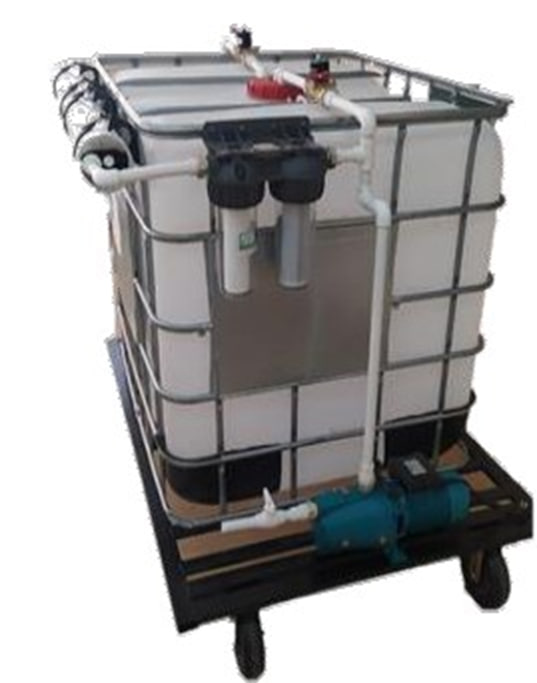
The university is not just a passive user of this system; it also contributes technological solutions. Researchers at TIIAME have developed an electro-hydraulic disinfection unit and tested compact “NEUTRALIZE” multi-stage treatment modules (https://www.youtube.com/watch?v=MqDHTKPjPsU). The electro-hydraulic device uses high-voltage pulsed discharges to inactivate harmful microorganisms in wastewater; laboratory trials have shown high removal efficiency for bacterial indicators with comparatively low energy consumption. The NEUTRALIZE module combines membrane filtration, UV disinfection and adsorption, producing clear, disinfected water suitable for technical and sanitary purposes. In 2024, these modules were piloted at selected laboratory and workshop points on campus.
In addition, a mobile melioration laboratory
is used to collect and analyse wastewater samples at different points in the
internal network, providing an independent check on the quality of effluent
sent to the Salar plant. For students, this creates a direct link between
theoretical lectures on treatment processes and real measurements from
operating systems.
In the coming years, the university intends to
expand pilot applications of electro-hydraulic disinfection and NEUTRALIZE
modules in small decentralised treatment units—for example, at specific
laboratory blocks or sports facilities—and to integrate these trials into
master’s and PhD research projects.