

Water-conscious building standards
At TIIAME National Research University,
sustainability is embedded in the way we design, construct and operate our
campus. Our Water-Conscious Building Standards translate this commitment into
concrete technical requirements that minimise water use, protect local water
resources and support the achievement of SDG 6: Clean Water and Sanitation.
These standards apply to both new buildings and major renovations, ensuring
that the entire campus progressively shifts towards more efficient,
climate-resilient infrastructure.
The standards are fully in place by 2024
and are aligned with the national regulatory framework of the Republic of
Uzbekistan. Internal water supply and building drainage systems follow SHNQ
2.04.01-22, while external sewers and stormwater infrastructure are designed
and operated in accordance with QMQ/KMK 2.04.03-19. Discharges to the municipal
sewer system comply with VMQ №11 (03.02.2010), which regulates pretreatment and
the acceptance of industrial and institutional effluents. All measures are
further guided by the Law O‘RQ-784 (2022) on drinking-water supply and
wastewater disposal, and potable water quality is monitored in line with O‘zDSt
950:2011.
Within buildings, TIIAME prioritises
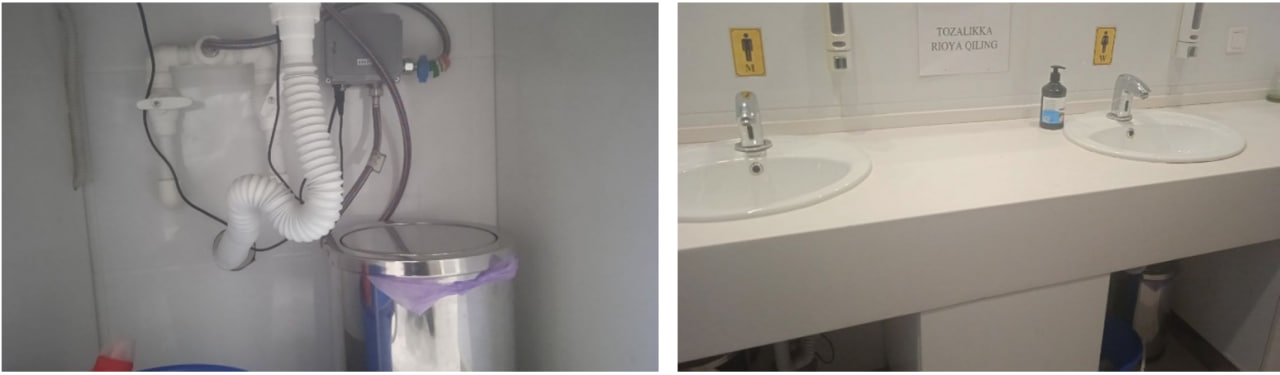
water-saving fixtures and fittings as a mandatory design feature. Low-flow,
sensor-based taps are installed across teaching blocks, administrative
buildings and residence halls to reduce consumption at washbasins; these units
are specified to operate at or below a defined flow rate, with automatic
shut-off to prevent wastage (Figure 1). Urinals are equipped with cistermiser
devices that control flushing frequency, significantly reducing unnecessary
water use in high-traffic sanitary zones (Figure 2). Throughout the campus,
low-flush toilets are installed as standard (Figure 3), further contributing to
the reduction of water use in restrooms without compromising hygiene and user
comfort.

The plumbing systems that support these fixtures
are designed for reliability, safety and efficiency. All potable water and
wastewater pipelines use certified plastic materials (for example uPVC and
PP-R), selected and installed in line with SHNQ 2.04.01-22 to ensure durability
and prevent leakage. Hot and cold water systems are configured with appropriate
temperature controls: hand-washing points are kept at safe, comfortable
temperatures (around 37 °C), while hot water circuits in food service and
sanitation areas are maintained at higher temperatures (around 65 °C) to
support hygiene and disinfection. Wastewater from campus buildings is
collected, pre-treated where required (for example via grease traps in kitchens
and proper segregation of laboratory wastes), and then discharged to the municipal
network, in full compliance with QMQ/KMK 2.04.03-19 and VMQ №11.
Rainwater and stormwater are managed
through a system of engineered channels, drains and inlets that protect the
campus from waterlogging and structural damage. Seasonal rainfall is directed
via reinforced concrete channels and surface drainage elements to existing
municipal drainage systems, thereby safeguarding building foundations and paved
areas. In line with national standards, these systems help to prevent erosion,
reduce localised flooding and maintain a clean and safe environment around
academic and residential facilities.
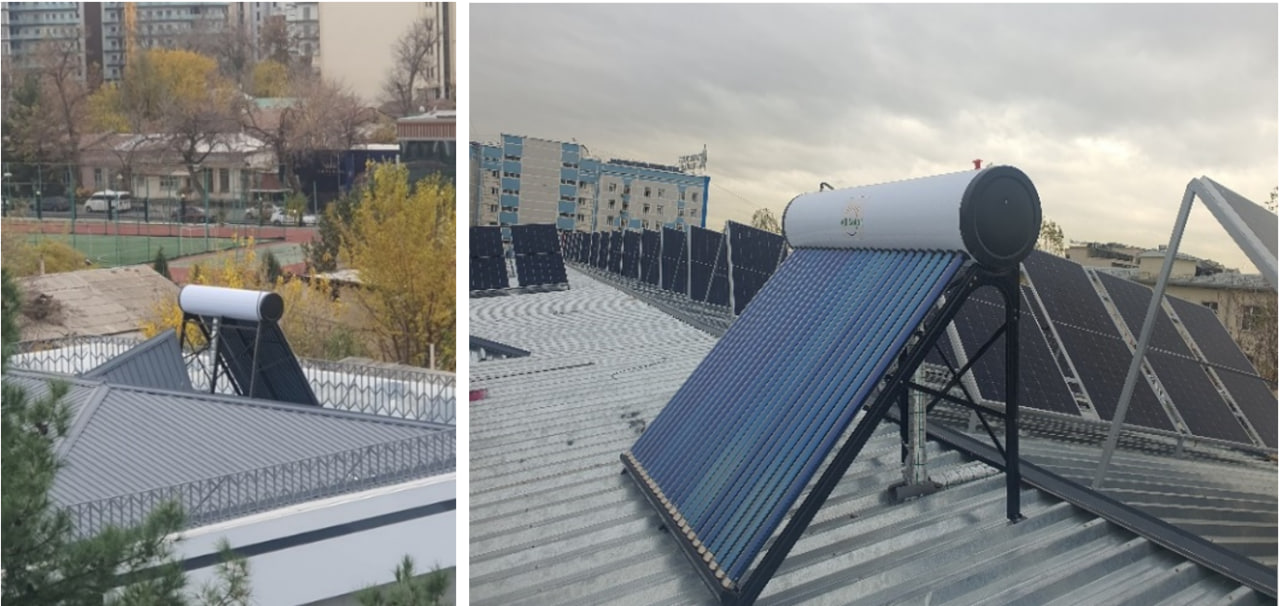
Energy efficiency is also an integral component of the university’s water-related infrastructure. Solar water heating collectors installed on the roofs of facilities such as the Students’ Sports Hall and dormitories (Figures 4 and 5) provide a renewable source of hot water for showers, sanitation and selected heating applications. By reducing the load on conventional boilers, these systems lower both energy consumption and the indirect water footprint associated with energy generation. Buildings are constructed or retrofitted with modern thermal insulation materials—typically with a minimum thickness of 50 mm on roofs and walls—which helps maintain indoor comfort while reducing the energy required for heating and cooling.
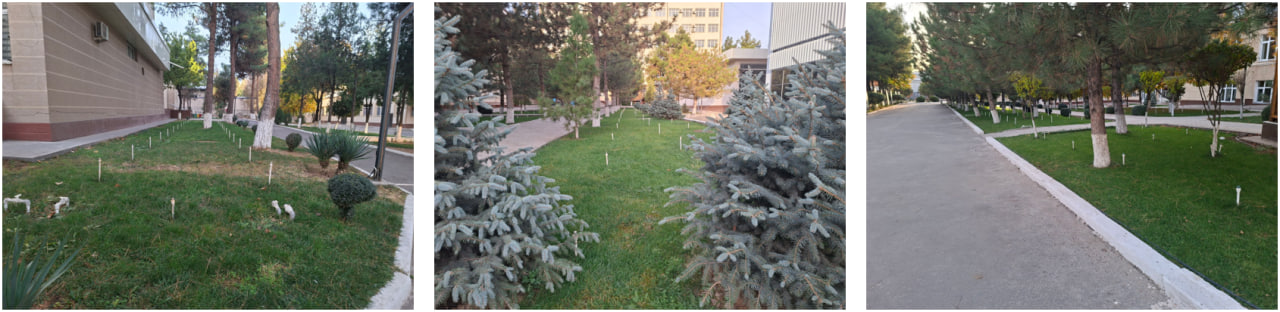
Beyond the building envelope, TIIAME’s outdoor spaces are managed with a strong focus on water conservation. The main courtyards and green areas are irrigated using drip irrigation systems equipped with filtration and pressure regulation, ensuring that water is delivered slowly and directly to plant root zones rather than being lost through surface evaporation or runoff. These systems are controlled through scheduled irrigation programmes, typically operating during the cooler evening and early morning hours, and are complemented by the use of drought-resistant, perennial plant species that require less frequent watering. In this way, the campus landscape contributes to biodiversity and aesthetic quality while keeping irrigation demand to a minimum.
To support these engineering measures,
TIIAME is progressively integrating smart monitoring and automation into its
water infrastructure. Real-time monitoring systems track water use in key
buildings and detect anomalies that may indicate leaks or malfunctions.
Automated devices such as cistermisers and sensor taps help to maintain
consistent performance without relying on user behaviour alone, while metering
and logging systems provide the data needed for evidence-based management and
continual improvement of water efficiency.
Through this integrated approach—combining national regulatory compliance, water-saving technologies, efficient plumbing, resilient stormwater management, renewable energy use, water-wise landscaping and smart monitoring—TIIAME National Research University is establishing a campus infrastructure that is both resource-efficient and future-oriented. These Water-Conscious Building Standards not only reduce the university’s environmental footprint, but also serve as a practical model for sustainable building practice in the higher education sector of Uzbekistan and beyond.