
A teacher, recognized by scientists in the globe
19.08.2026
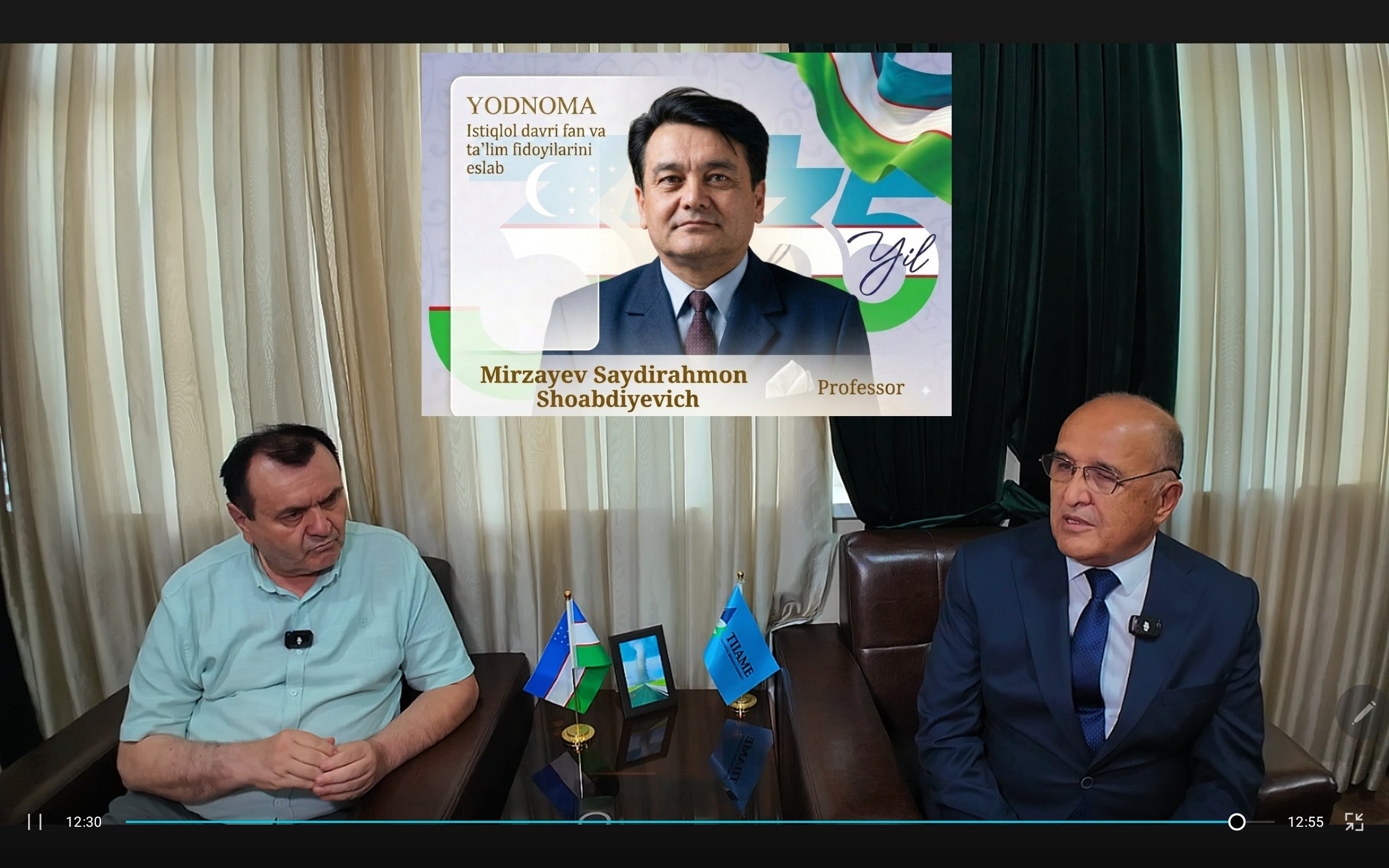
Ahead of the 35th anniversary of the state independence of the Republic of Uzbekistan, we have been conducting a series of video interviews dedicated to the devoted scientists and teachers who worked at our university and made significant contributions to the development of science and education.
One of these interviews featured Professor Abduhakim Temirkhujayevich Salokhiddinov, who spoke about his teacher, Professor Saydiraxmon Shoabdievich Mirzaev, a Honored Scientist of the Republic of Uzbekistan.
R. J.: Abdukhakim Temirkhujayevich, could you first tell us about your teacher and his contribution to the development of science?
A. S.: Fortunately, just as in the history of our entire nation, prominent scientists, scholars, and dedicated educators have worked and made their contributions to the history of our country and our university.
Among them was Professor Saydiraxmon Shoabdievich Mirzaev, a world-renowned scientist, Doctor of Geological and Mineralogical Sciences, Professor, Honored Scientist of the Republic of Uzbekistan, former People's Deputy of the Soviet Union and the Republic of Uzbekistan, and Deputy Chairman of the Supreme Council's Committee on Ecology and Rational Use of Natural Resources.
He was an outstanding scientist who successfully combined scientific research, industrial, public, and educational activities. During his relatively short but highly productive 68-year life, he accomplished tremendous work.
His contributions were recognized by the state with the “Badge of Honor” Order, the “For Distinguished Labor” and “For Excellence in Labor” medals, as well as the honorary title of Honored Scientist of the Republic of Uzbekistan.
R. J.: You mentioned that Professor Mirzaev was one of the world-renowned scientists. Could you tell us more about his scientific work, his attitude toward science, and the example he set for others?
Indeed, Professor Saydiraxmon Shoabdievich Mirzaev was a world-renowned scientist who, through his high-level scientific research and its results, made a significant contribution not only to solving local problems but also to addressing global scientific challenges. He received particular recognition from the international scientific community.
Based on the results of his extensive scientific activities, he was elected a professor at Colorado State University, a member of the International Association of Hydrogeologists, and a member of numerous scientific commissions.
Professor Mirzaev conducted highly effective research in the following areas:
the laws governing the formation and distribution of groundwater, methods for studying groundwater, and its use for economic purposes;
hydrogeological assessment of water supply for populated areas and industrial enterprises under various natural and economic conditions;
the interaction between groundwater and surface water and technologies for artificially recharging groundwater reserves;
integrated approaches to the management of groundwater and surface water.
In many respects, he laid the foundations for what is now known as the science of water resources management.
Let me give several examples of his scientific achievements.
Together with his students, Professor Mirzaev developed a comprehensive scientific framework describing the formation and distribution of groundwater reserves in Uzbekistan's arid zones and laid the foundations for technologies for artificially replenishing groundwater reserves.
He and his colleagues developed methodologies and principles for assessing, exploring, and using groundwater reserves for irrigation. They also developed technologies and principles for artificially managing groundwater formation processes in water-scarce areas and zones with major water abstraction facilities.
The implementation of these results made it possible to significantly improve the reliability of water supplies for industrial sectors in the Ahangaran Valley and increase the sustainability of drinking-water sources for Tashkent several times over.
Professor Mirzaev's scientific findings were also used as a scientific basis for developing schemes for the comprehensive use and protection of water resources in the Amu Darya, Syr Darya, and Aral Sea basins, as well as for developing a comprehensive groundwater-use scheme for the Republic of Uzbekistan.
Professor Mirzaev did not merely conduct and organize scientific research in these areas—he created his own distinctive internationally recognized scientific school.
Under his scientific supervision, many highly qualified scientists were trained, including 40 Candidates of Sciences and 12 Doctors of Sciences. They continue to make significant contributions to the development of independent Uzbekistan and a number of countries around the world.
Professor Mirzaev placed particular importance on freedom, integrity, and dedication in scientific work. Scientific councils and discussions in which he participated were conducted at an exceptionally high level and themselves served as a kind of scientific school.
Another major contribution of Professor Mirzaev was that, as early as the 1990s, he recognized that the future development of science and education in the sector depended on broad international cooperation. He paid particular attention to developing mutually beneficial partnerships with leading foreign scientific and higher education institutions.
Professor Mirzaev not only pursued such cooperation himself but also encouraged his students to do so. As a result, mutually beneficial partnerships were established with a number of leading foreign universities, and several international grants were secured.
These included cooperation with the University of Liège in Belgium, the University of Washington, Colorado State University in the United States, and the European Community's INCO-Copernicus and INTAS programs.
Let me share one event that personally convinced me once again that he was truly a world-renowned scientist.
Professor Saydiraxmon Shoabdievich Mirzaev passed away unexpectedly on December 11, 1999. At the time, I happened to be undertaking a scientific internship in the United States.
When I informed my colleagues at the U.S. Hydrology Institute, which had thousands of employees, of this tragic news, they organized a special memorial meeting the following day. Scientists and staff from various institutions across the United States attended.
One prominent American scientist who spoke at the meeting said:
“Scientists like Professor Saydiraxmon Mirzaev are born only once in a hundred years. His loss is not only a great loss for Uzbekistan, but for world science as well.”
This alone demonstrates the extent to which Professor Saydiraxmon Shoabdievich was recognized internationally as a scientist.
R. J.: You mentioned that Professor Mirzaev was not only a major scientist but also a dedicated public figure. Could you elaborate on this?
A. S.: Professor Mirzaev combined his scientific research with teaching, industrial work, and public service. He was a member of numerous scientific and public councils and served as an adviser to committees of industrial, design, and research institutions.
At the same time, Professor Mirzaev was one of the organizers of the mahalla movement in Tashkent. For many years, on a voluntary basis, he served as chairman of the Shofayz Mahalla Committee in Tashkent, chairman of the Coordinating Council of Mahalla Committees in the A. Ikromov District, and a member of the Tashkent City Coordinating Council.
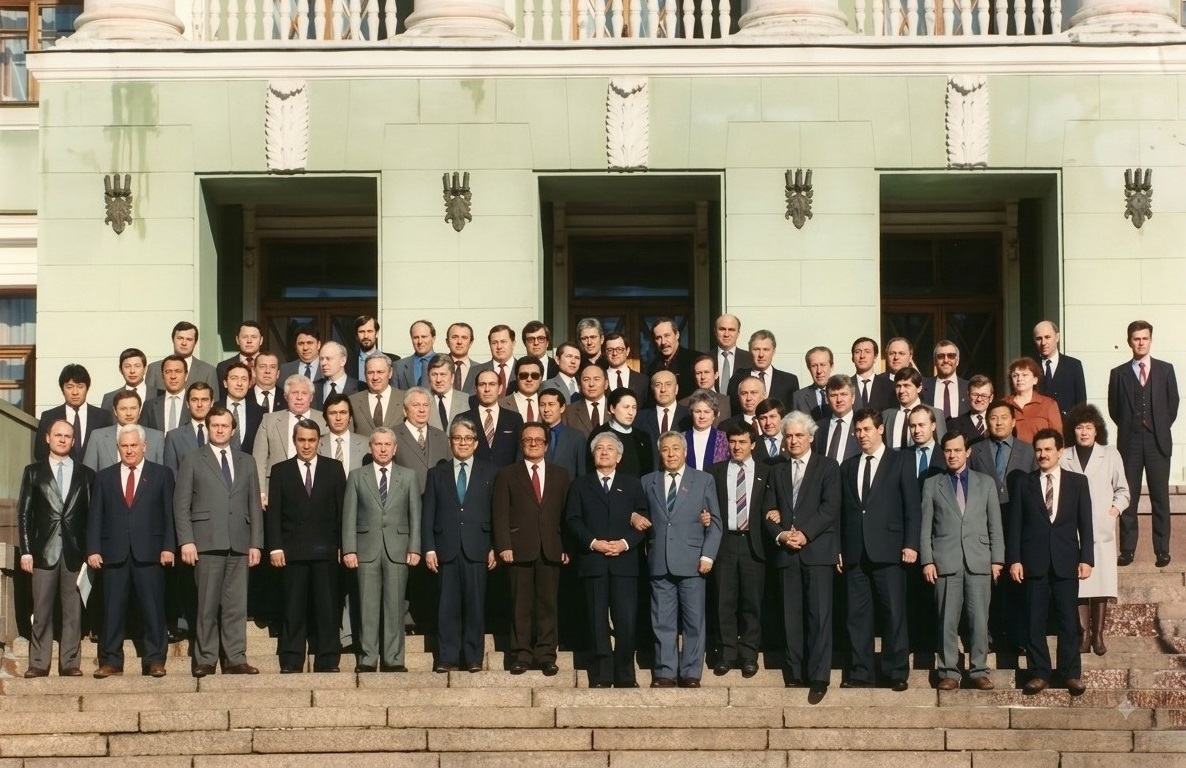
His public service was highly valued by the community. He was nominated by the mahalla committees and elected first as a People's Deputy of the former Soviet Union and later as a People's Deputy of the Republic of Uzbekistan.
He was also active as a people's deputy, serving as Deputy Chairman of the Supreme Council's Committee on Ecology and Rational Use of Natural Resources. He represented Uzbekistan in working groups involved in drafting the “Union Treaty” and was included among Uzbekistan's representatives in the Coordinating Council of the Commonwealth of Independent States.
From the earliest days of independent Uzbekistan, he served the country's development with his progressive ideas, knowledge, and expertise.
R. J.: As one of Professor Mirzaev's many students, could you also tell us about his work as a demanding educator and mentor?
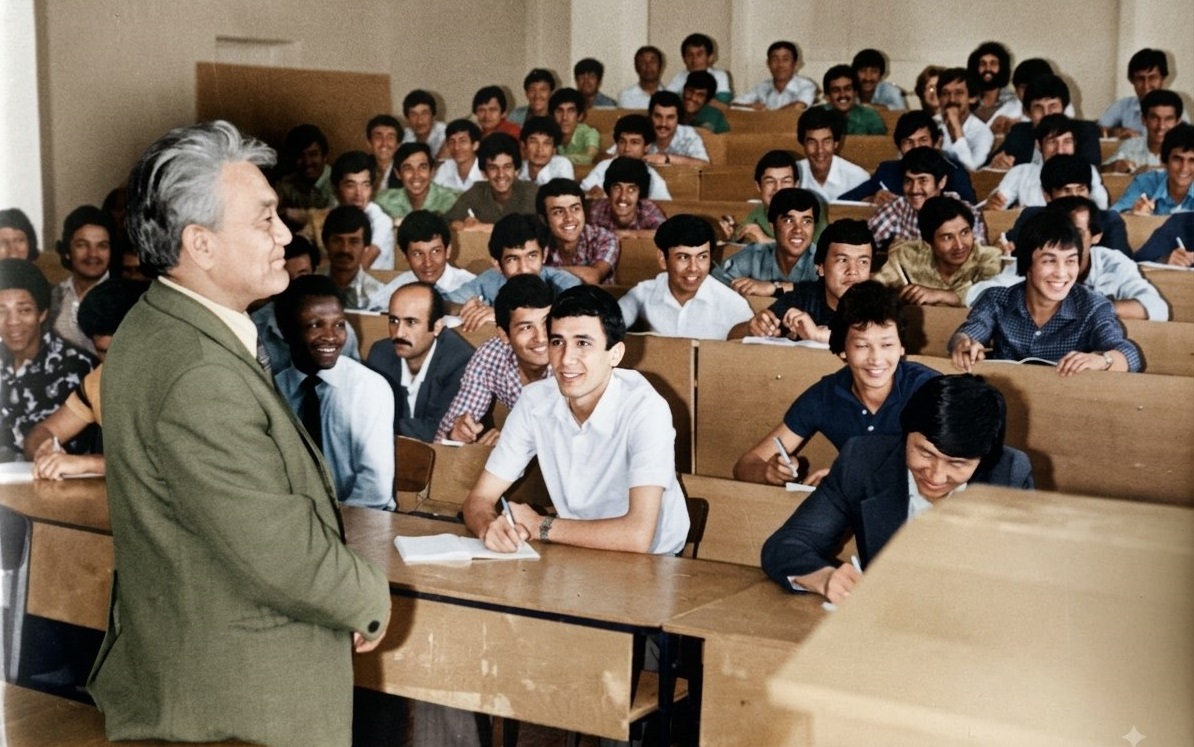
A. S.: As I mentioned earlier, Professor Mirzaev was not only a world-renowned scientist and public figure, but also a truly dedicated teacher and mentor.
He held a number of important positions throughout his career:
Assistant at the Department of Hydrogeology and Engineering Geology of the Central Asian Polytechnic Institute in 1957–1958, and senior lecturer in 1959–1961;
Head of the Laboratory for Groundwater Resource Assessment at the Institute of Hydrogeology and Engineering Geology of the Academy of Sciences of Uzbekistan from 1961 to 1976;
Head of the Department of Hydrogeology at the Tashkent Institute of Irrigation and Agricultural Mechanization Engineers (TIIAME) from 1976, and later Head of the Department of Integrated Use and Protection of Water Resources from 1979;
Dean of the Faculty of Hydromelioration at TIIAME;
Vice-Rector for Scientific Affairs at TIIAME from 1992 to 1999.
He was extremely demanding of both himself and those around him, while at the same time being a kind and caring teacher. Everyone who became his student passed through a truly outstanding scientific school.
I thank God and feel proud that I had the opportunity to become a student of such a teacher. His guidance in science was not the only school he provided—his daily conduct, work ethic, and attitude toward people were themselves a great lesson.
I am convinced that his scientific legacy will continue to serve science and humanity for many years to come. We must continue studying and preserving this legacy.
The bright memory of Professor Saydiraxmon Shoabdievich Mirzaev will remain forever in the hearts of his students and followers, as well as among specialists and young people working in the fields of sustainable water-resource management, rational water use, and water-resource protection.
R. J.: Abdukhakim Temirkhujayevich, thank you for sharing this valuable information about your teacher. I would also like to once again congratulate you on the 35th anniversary of our independent republic.
A. S.: Thank you. Congratulations to you as well.