

The Essence of Dual Education in the conditions of Fergana Region
04.05.2026
It is well known that in recent years, due to severe climate change, ensuring water supply for agricultural crops has become one of the most urgent issues. Within the framework of the implementation of the “Uzbekistan–2030” Strategy, systematic efforts are being carried out to ensure efficient use of water resources, modernize irrigation infrastructure, and guarantee sustainable water supply to agricultural lands.
Today, the Fergana region has 370,000 hectares of irrigated land, with an annual water consumption of 3.4 billion m³. Water losses amount to 30%, while the implementation level of water-saving technologies currently stands at 51%. By 2026, it is planned to expand water-saving technologies to 41,000 hectares and increase their implementation level to 70% through scientifically based approaches. For this purpose, seminars are being organized with district farmers and agricultural clusters. Depending on land reclamation conditions and soil composition, the application of drip irrigation, sprinkler irrigation, subsurface irrigation, pulsed systems, and laser technologies is expected to save approximately 392 million m³ of water.
In Fergana region, there are three reservoirs, and water resources are distributed as follows: 51% Norin–Syrdarya, 15% Qoradarya, 24% local streams, 6% groundwater, and 4% collector drainage water. In addition, the region has 6,214 km of inter-farm irrigation networks, 12,398 km of internal irrigation systems, 168 state-owned pumping stations, 3,589 vertical wells and pumping units, and 15,057 km of collector-drainage networks.
In accordance with the Decree of the President of the Republic of Uzbekistan No. PD-122 dated April 2, 2026 “On Measures to Further Improve the Training System of Agricultural and Water Management Engineers,” the regional administration, scientific advisors, the Agency for Management Efficiency, and the Basin Irrigation System Authority will create necessary conditions for 46 students to undergo dual education-based practical training starting from May 11, 2026.
In this framework:
15 students will specialize in agricultural mechanization,
9 students in water management,
22 students in hydraulic structures construction and hydropower engineering.
Each student will be assigned to specific facilities (canals, pumping stations, hydraulic structures) and will be supervised by an experienced specialist as a mentor. Based on the “mentor–apprentice” system, students will be trained in real working conditions and provided with accommodation, meals, and safety equipment.
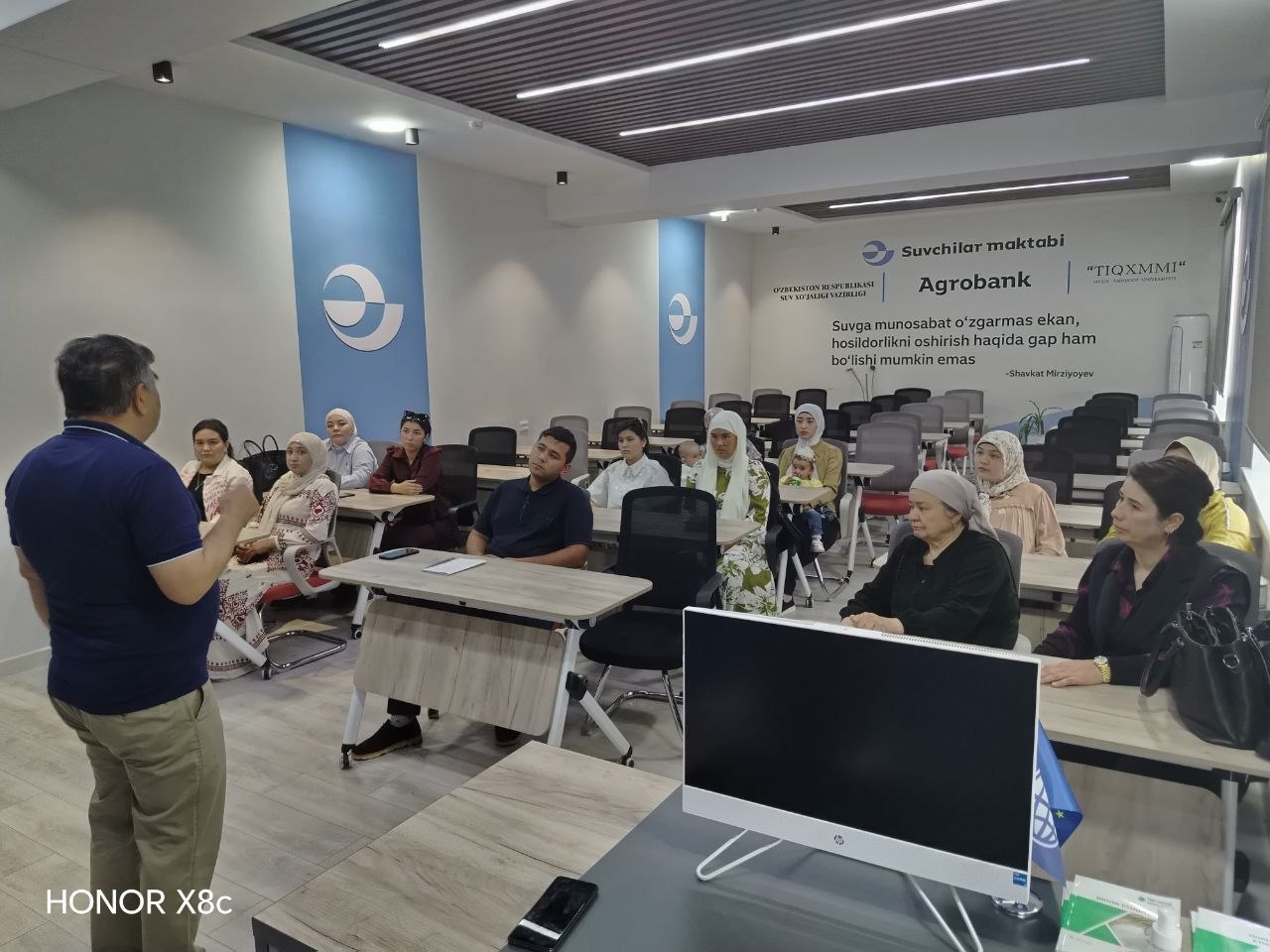
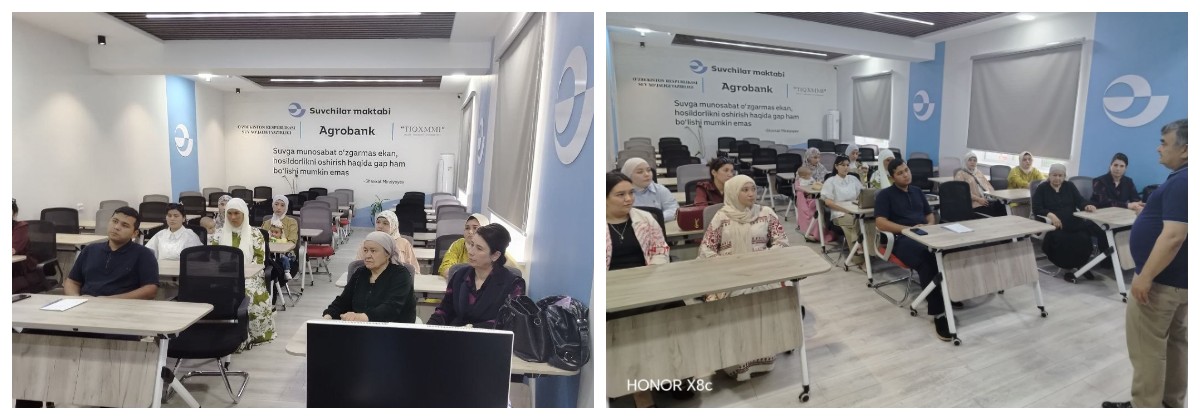
On April 27-28,2026 at the “Water Workers School” under the Syrdarya–Sox Irrigation Systems Basin Administration in Fergana region, a scientific and practical event was held with the participation of Professor Sanoatxon Khamdamovna Zakirova, Doctor of Agricultural Sciences from the “Agricultural Joint Faculty” of Fergana State University, Head of the Department of Soil Science, 4th-year students of Soil Science, and Professor Sabirjan Khusanbayevich Isayev, Scientific Advisor to the Governor of Fergana region on agriculture and water management issues, Doctor of Agricultural Sciences, from the “Irrigation and Melioration” Department of the Tashkent Institute of Irrigation and Agricultural Mechanization Engineers – National Research University.
During the event, participants were provided with detailed information on large-scale reforms being implemented in the country, priority directions of state policy, and ongoing innovations and changes in the water management sector. In addition, brief information on dual education was presented, emphasizing the importance of active student participation in dual training programs. It was also highlighted that active involvement in dual education would create a strong foundation for future employment opportunities based on acquired practical knowledge and skills.