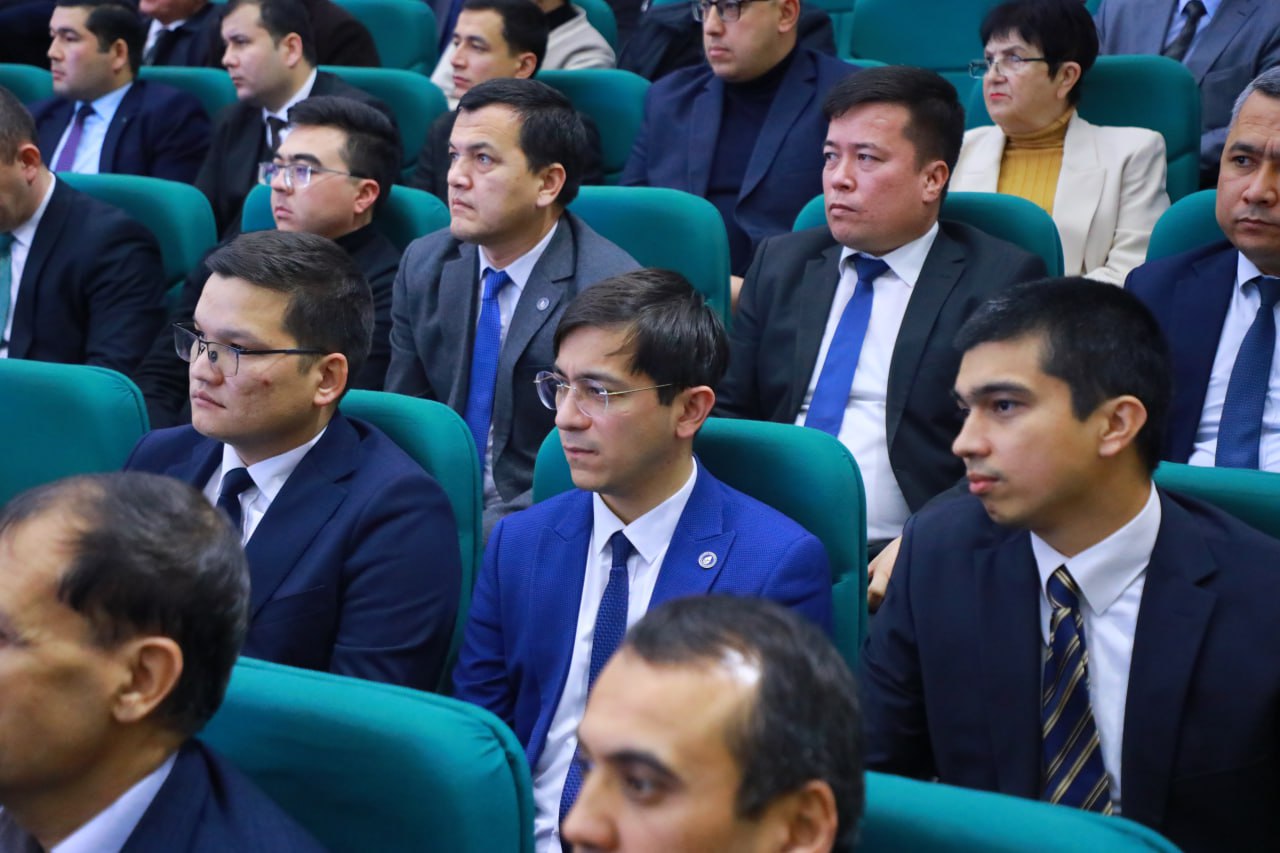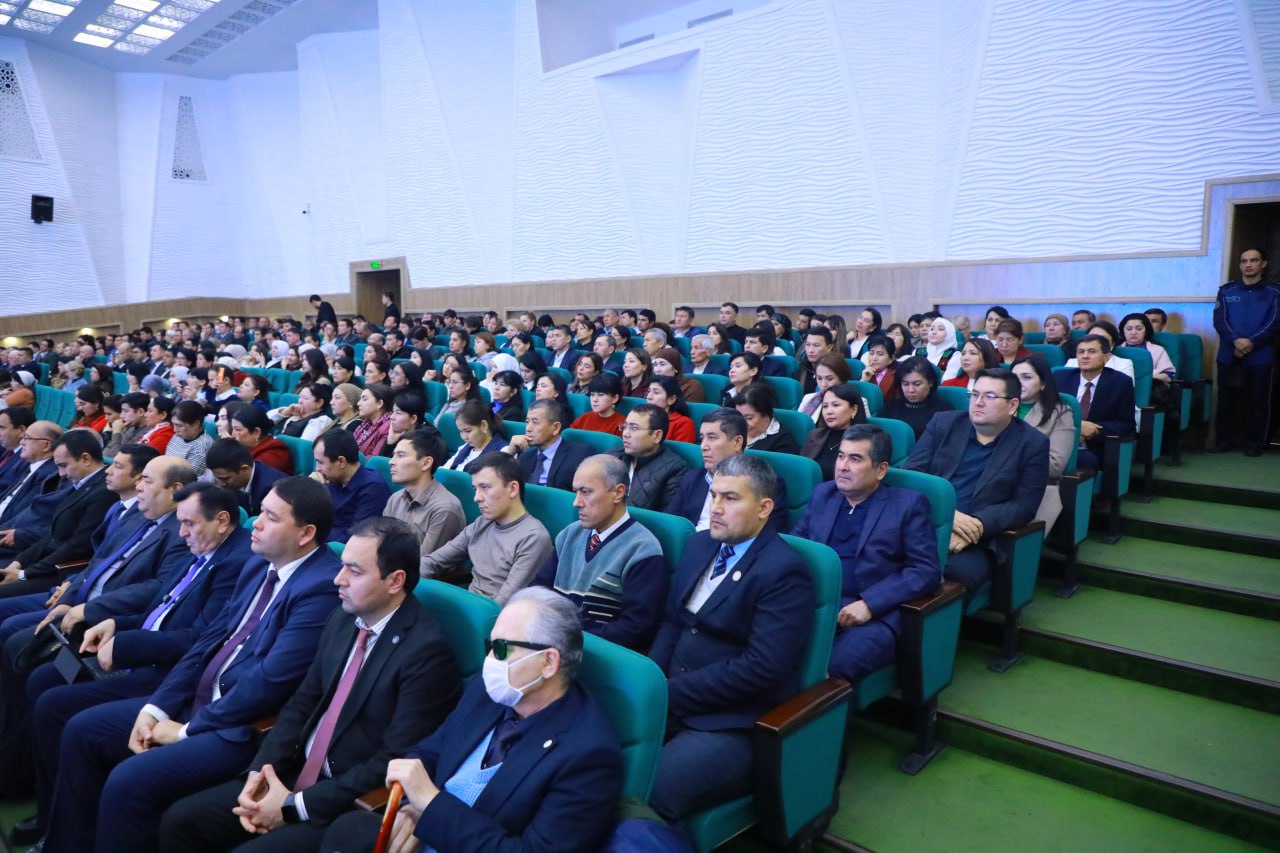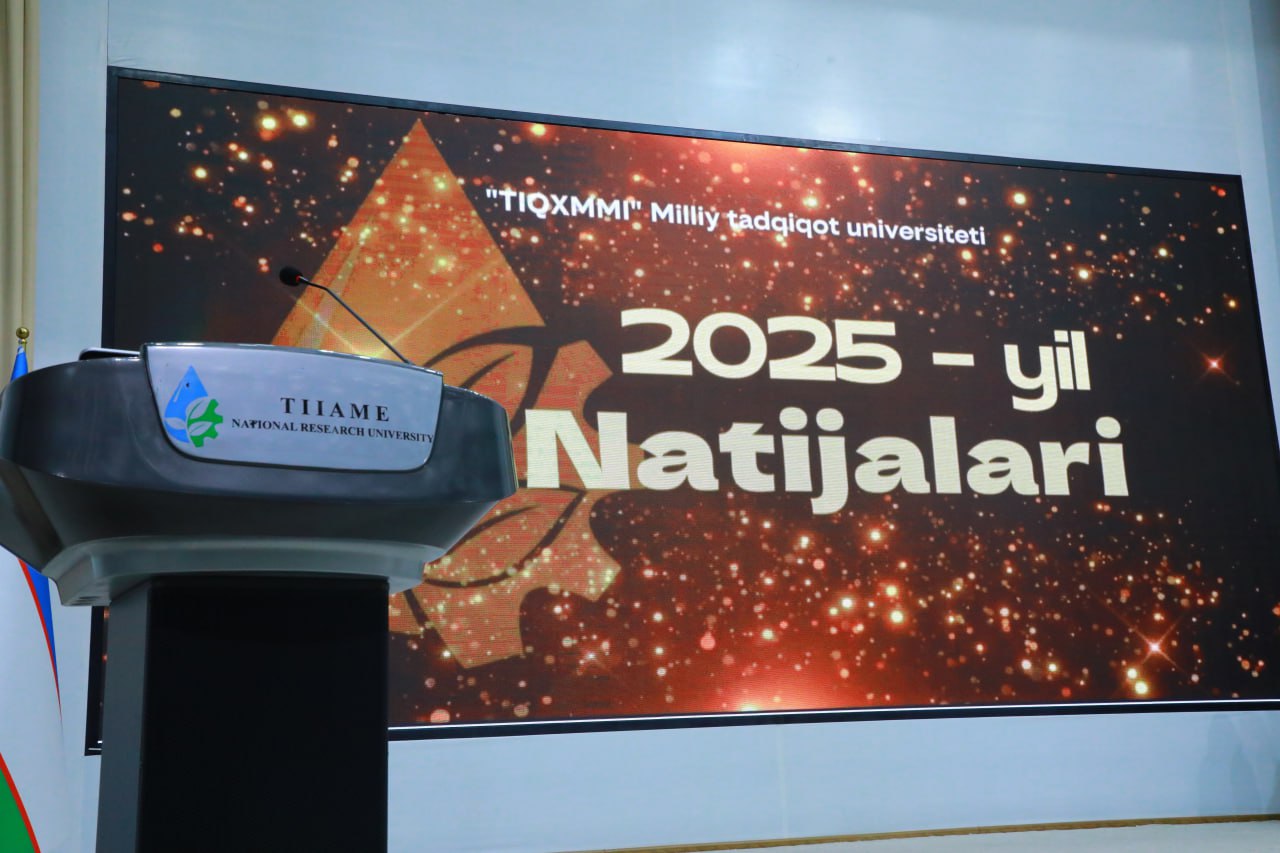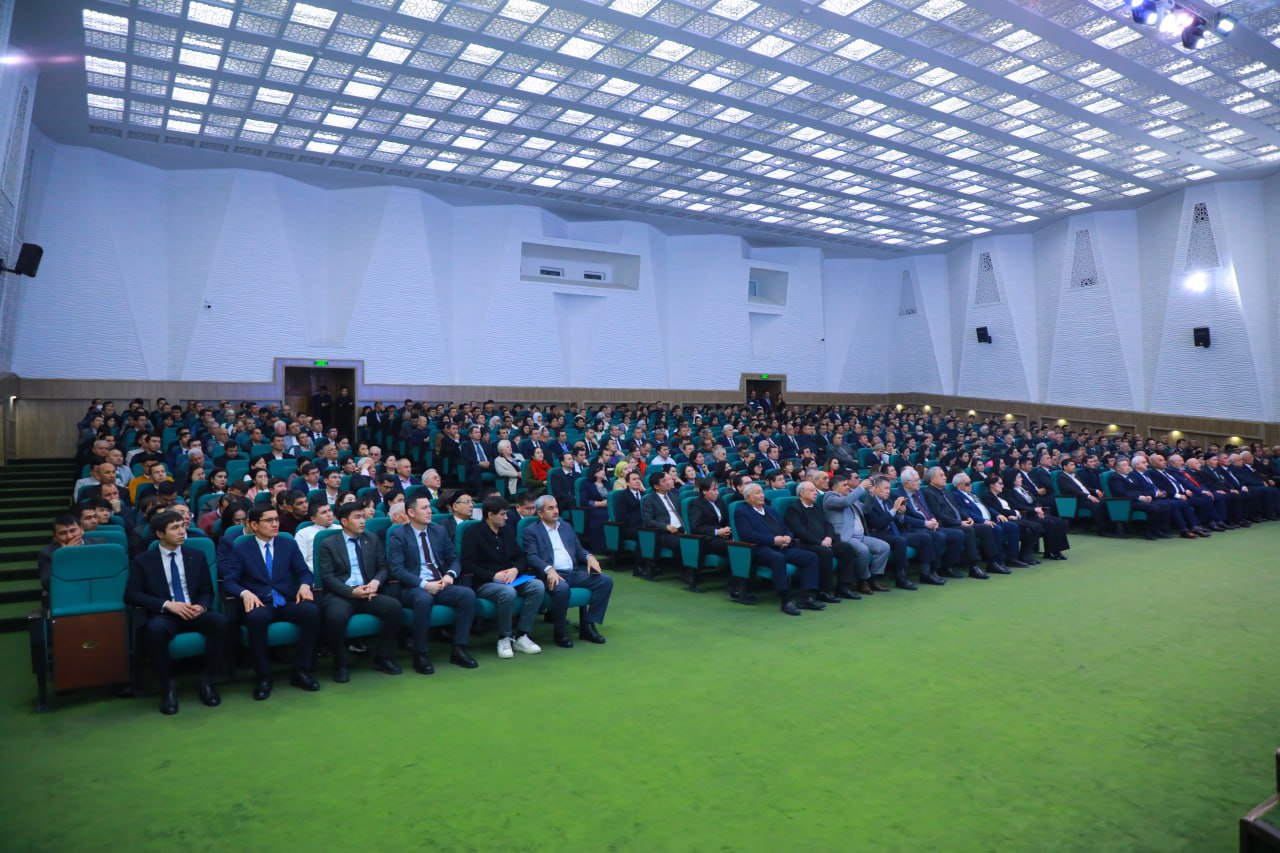

A ceremonial event dedicated to the outcomes of 2025 was held at the “TIIAME” National Research University.
28.12.2025
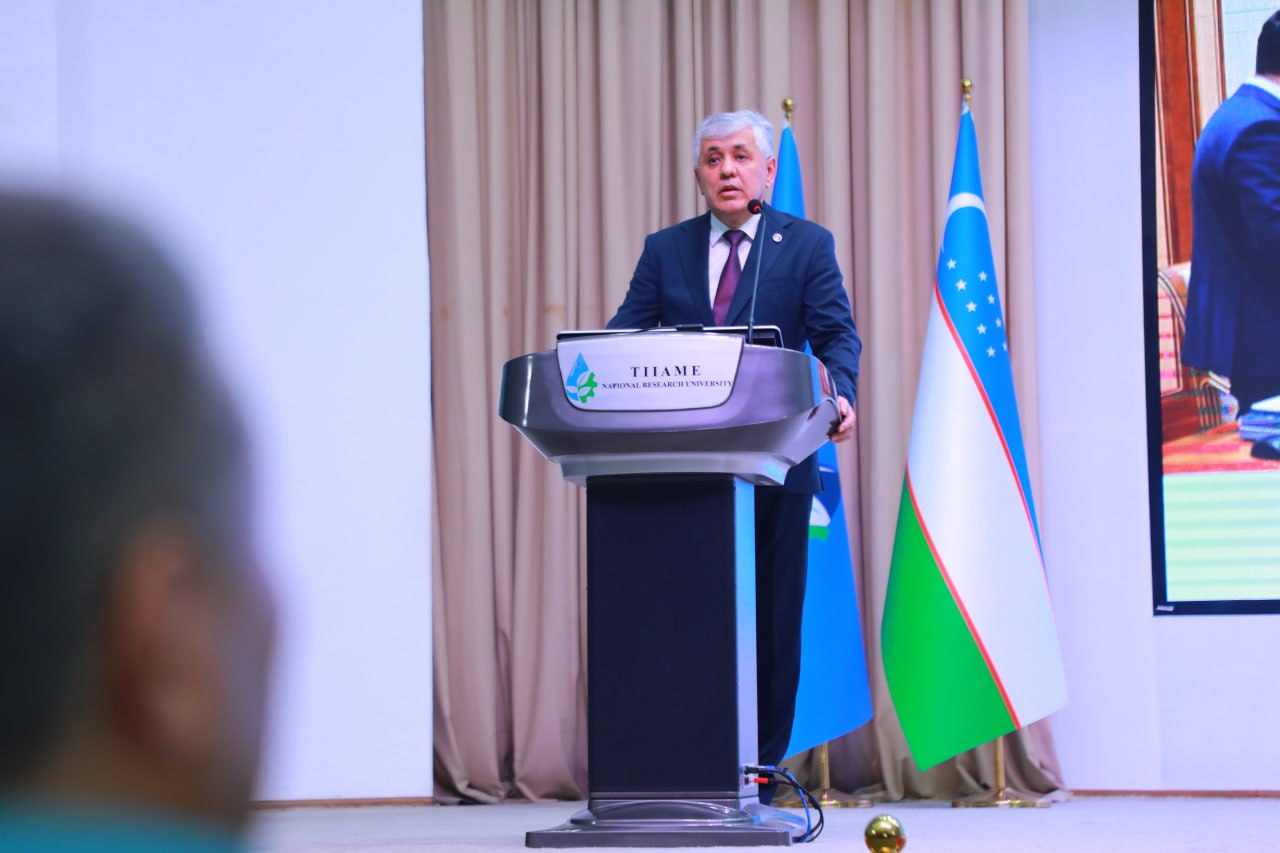
A ceremonial event dedicated to the outcomes of 2025 was held at the “TIIAME” National Research University. At the outset, based on the priority tasks outlined in the Address of the President of the Republic of Uzbekistan, Shavkat Mirziyoyev, to the Oliy Majlis and the people of Uzbekistan delivered on December 26,2025 the specific objectives set before the university community were clearly defined.
During the event, University Rector Bakhadir Mirzayev reviewed the results achieved in 2025 in the areas of education and upbringing, science, international cooperation, and innovation and presented key performance indicators to the university staff.
Special emphasis was placed on the university’s growing reputation in the international arena and its positions in global rankings.
In particular, the “TIIAME” National Research University ranked 469th among world universities in the QS World University Rankings 2026 and 501st in the THE World University Rankings. In addition, according to the THE Interdisciplinary Science Rankings, the university secured 150th place globally and leading positions among universities in Central Asia and Uzbekistan.
At the same time, the university’s strengths and weaknesses were thoroughly analyzed.
Alongside this, the university’s scientific and innovative activities in 2025 were reflected in quantitative indicators. Specifically, 900 scientific articles were published in journals indexed in the Scopus and Web of Science databases, of which 458 appeared in prestigious Q1 and Q2 journals. Moreover, 479 articles were published in collaboration with foreign specialists.
Furthermore, throughout the year, 72 monographs were published; patents were obtained for 20 inventions and utility models and copyright certificates were issued for 150 computer programs and other materials. To improve the educational process, 194 educational publications were developed, including 66 textbooks and 128 teaching manuals.
In addition, within the framework of grants and contractual projects, 29 international grants as well as 26 state grants and economic contracts were implemented.
During 2025, in order to enhance the university’s international capacity, experienced specialists who had studied and conducted research abroad were recruited to permanent academic positions. Notably, Nobel Prize laureate Professor Henricus Balthasar Josef Leyemans was engaged to work at the university.
Moreover, compatriots with educational backgrounds and research experience from countries such as the United States, the United Kingdom, Germany, Italy, Austria, Hungary, Malaysia, China, and the United Arab Emirates joined the university community. These scholars are contributing significantly to the further improvement of educational quality and scientific potential at the university.
Within the framework of the event, the university’s short, medium and long-term development strategies for 2025–2030–2035 were also presented. This strategy aims to transform the university’s activities and elevate it to a competitive, world-class, first-tier university on the international stage.
Under this strategy, the goal has been set for the university to enter the TOP 300 of the QS and THE international rankings by 2030, the TOP 50 universities in the Asia-Pacific region and for its departments to be ranked among the TOP 100 in international subject-specific rankings.
In addition, to enhance the scientific and pedagogical capacity of faculty members, it is planned to introduce a system for training and professional development based on artificial intelligence and digital technologies across relevant fields.
It is also planned to establish an integrated management system at the university that encompasses an educational cluster ranging from preschool education to higher education and continuing professional development.
In the area of internationalization, attracting students from India, Nepal, Sri Lanka, Saudi Arabia, Qatar, Egypt, the UAE, China and Central Asian countries, as well as creating favorable academic and social conditions for them, has been identified as a priority task.
At the same time, in order to elevate the university to a new level, priority tasks have been defined to introduce a “Digital University” model and to create a secure campus and a modern educational environment based on the principle of resources, capabilities, and effective management.