

Scientific discussion was held on the efficient use of saline lands
12.11.2026
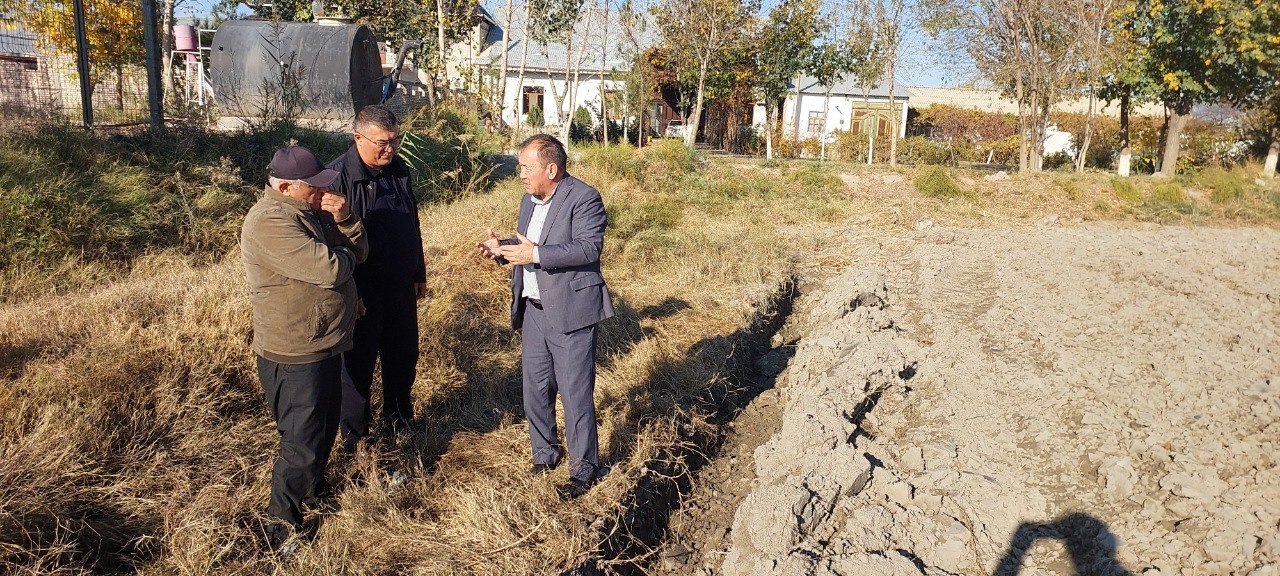
A scientific discussion was held with representatives of partner organizations to ensure the implementation of the tasks outlined in Resolution No. PD-122 of the President of the Republic of Uzbekistan dated April 2, 2026. The discussion focused on improving the reclamation status of saline lands, maintaining soil fertility, and introducing innovative technologies into agriculture.
During the discussion, Professor Sh.J. Imomov, Scientific Advisor to the Governor of Bukhara Region, presented the results of research on the efficient use of saline lands and the development of alternative agricultural technologies to conventional soil leaching methods.
According to the research findings, approximately 99% of agricultural land in Bukhara Region is cultivated using soil leaching practices to reduce salinity. The studies revealed that although soil leaching reduces soil salinity levels by four times, it also leads to a decrease in humus content by up to 4.7 times.
The innovative method proposed by Professor Sh.J. Imomov aims to explore opportunities for cultivating crops on saline lands without applying conventional soil leaching practices. According to the research results, this technology has the potential to increase agricultural crop yields by two to three times.
The scientific discussion was attended by S.Ye. Qurbanbayev, Director of the Karakalpakstan Regional Center under the Scientific Research Institute of Irrigation and Water Problems; B.S. Habibullayev, Director of the International Innovation Center for the Aral Sea Basin; and A.O. Mambetkarimov, Director of the Nukus Branch of the Executive Committee of the International Fund for Saving the Aral Sea.
During the meeting, participants exchanged views on the rational use of water and soil resources on saline lands, preserving organic matter in the soil, increasing agricultural productivity, and assessing the potential application of the proposed technology under the environmental conditions of the Aral Sea region.
Particular attention was also paid to testing the research findings under real production conditions, evaluating their agronomic, environmental, and economic effectiveness, and strengthening cooperation among interested scientific organizations.
This scientific cooperation is expected to contribute to preserving soil fertility in saline areas, conserving water resources, improving agricultural production efficiency, and ensuring environmental sustainability in the Aral Sea region.