

An open lesson on “Teaching methods and instructional tools” was held
12.11.2026
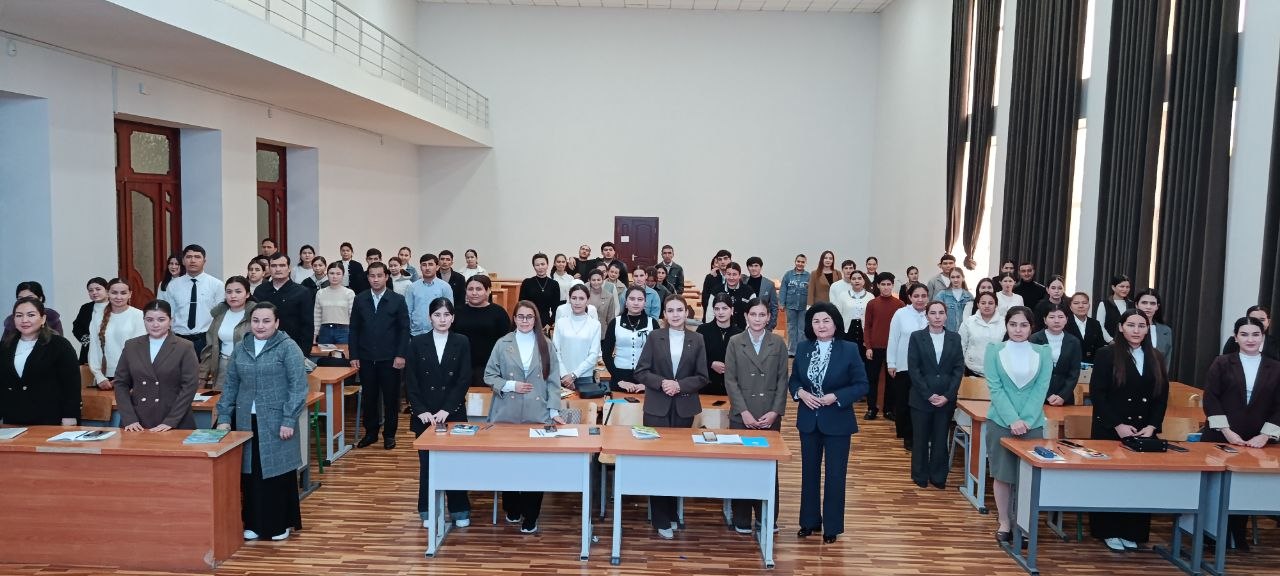
On November 11, 2026 Professor Zukhra Karabaevna Ismailova, Doctor of Pedagogical Sciences, from the Department of Professional Education at TIIAME National Research University, conducted an open lesson on “Teaching Methods and Instructional Tools” as part of the course General Pedagogy for second-year students majoring in Biology (60220300) at the Faculty of Land Resources and Cadastre.
The lesson began on time and featured an unconventional approach. At the beginning, the instructor introduced the central idea of the lesson: “A Method Is the Path to Knowledge”, and presented the lesson plan. The objectives, main types of teaching methods, and their respective characteristics were also explained.
During the lecture, the instructor introduced another interactive activity by selecting three students from the groups and assigning them the task of observing the lesson until its conclusion. Based on their observations, they were asked to develop three learning materials related to the topic: a Teaching Method Map, a Teaching Method Formula, and a Teaching Method Recipe.
Each student used a large sheet of paper (flipchart paper) to complete the assigned tasks, recording observations and preparing relevant information. At the same time, they actively participated in the lesson and listened to the instructor's presentation.
One of the key strengths of the lesson was its direct connection to the students' field of study — Biology. The instructor emphasized the importance of relating pedagogical concepts and teaching approaches to students' professional specializations. This approach made the lesson more relevant, engaging, and effective.
Various interactive teaching techniques were used to encourage the participation of the entire group, including “Guess the Method,” “Group Competition,” “Clustering,” “Discussion,” “Case Study,” and “Brainstorming.”
The lecture also explored teaching methods reflected in the works of Eastern philosophers, scholars of Uzbekistan, and Western European thinkers. Particular attention was given to the essence of these methods and the different approaches adopted by these scholars. This interdisciplinary perspective demonstrated the instructor's professional expertise and enriched the academic content of the lesson.
The lesson was delivered in an engaging, accessible, and interactive manner. It was conducted in both online and offline formats, with experts and specialists from various institutes and universities across the Republic participating.
The open lesson provided an opportunity to demonstrate effective teaching practices, encourage student engagement, and highlight the importance of innovative and interactive approaches in modern higher education.