
An Open Lesson on the Literary Analysis
05.10.2026
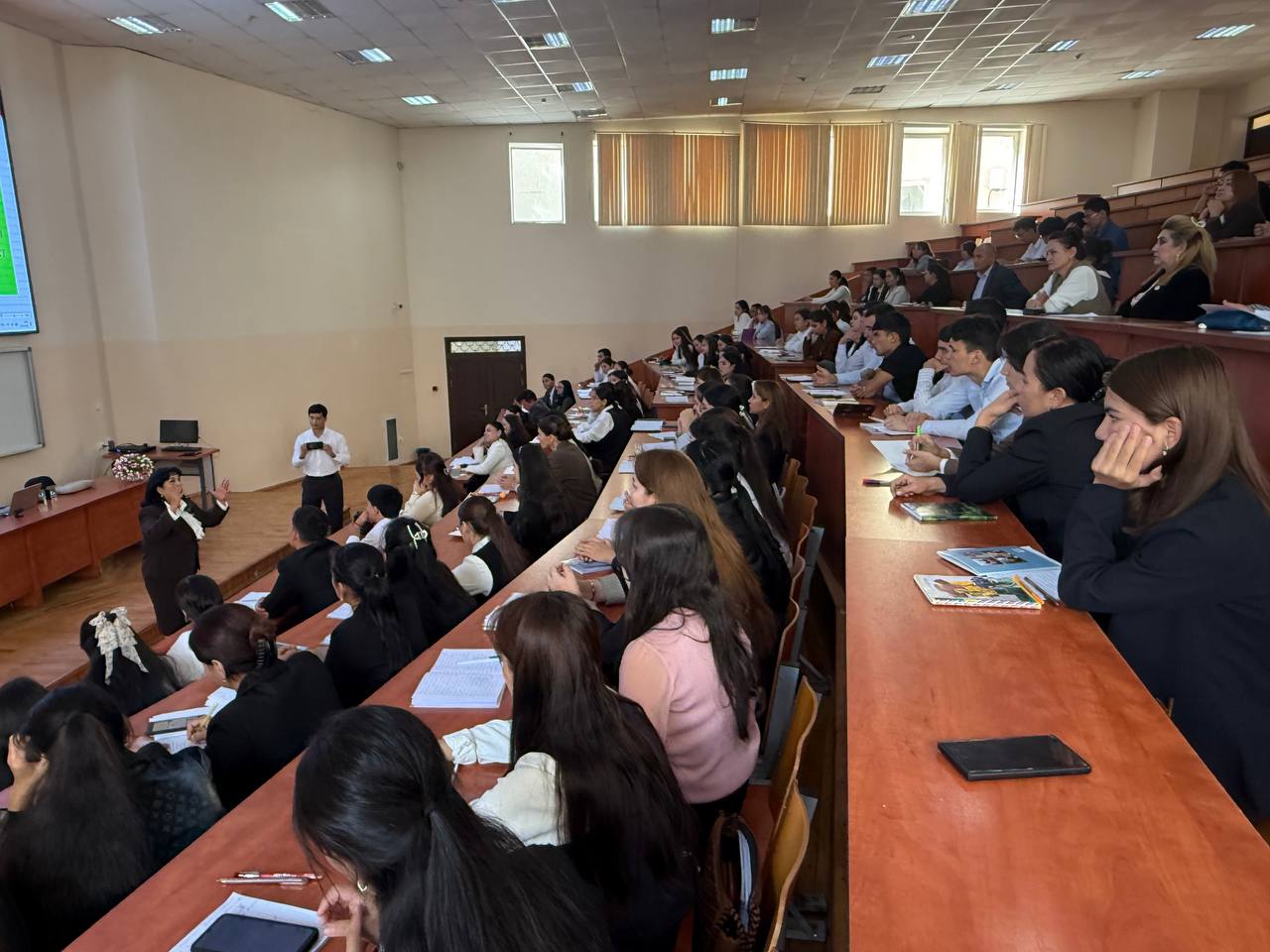
On October 5, 2026 at 1:00 p.m., an open lesson on the topic “Literary Analysis of Victor Hugo’s The Hunchback of Notre-Dame” was held at the National Research University “Tashkent Institute of Irrigation and Agricultural Mechanization Engineers” as part of the course History of World Literature. The lesson was conducted by Doctor of Pedagogical Sciences, Professor Sh.A. Abdullayeva.
The open lesson was organized for international students studying in the field of Philology and Language Teaching (Russian Language).
The session was attended online by distinguished experts, including X.I. Ibragimov, Rector of the Uzbekistan National Pedagogical University, Doctor of Pedagogical Sciences and Academician; Academician R.H. Djuraev; X.J. Khudoyqulov, Professor at Mirzo Ulugbek National University of Uzbekistan; Yu.U. Matenova, Head of the Department at Nizami Ganjavi National Pedagogical University of Uzbekistan and Doctor of Philological Sciences; Associate Professor N.T. Khamidova; A.X. Rakhmanova, Professor at Navoi State University; Associate Professor M.G. Aripova; Associate Professor N. Qurbonov of Jizzakh State University; Associate Professor G.I. Khalikova of Bukhara State University; Associate Professor F.D. Narmatova of Gulistan State University; as well as professors and Doctors of Pedagogical Sciences L.T. Akhmedova and V.I. Narbaeva from Uzbekistan State World Languages University.
The experts noted that the open lesson had been organized at a high scientific and methodological level and that innovative educational technologies had been effectively incorporated into the teaching process.
During the lesson, students were introduced to Victor Hugo’s The Hunchback of Notre-Dame, one of the masterpieces of world literature. They studied the content and central ideas of the novel, its main characters, and its artistic and literary features.
One of the key objectives of the lesson was to foster such important human values as humanism, compassion, justice, appreciation of beauty, and the ability to judge a person not by their outward appearance but by their inner world and moral qualities.
The lecturer emphasized that the novel is characterized by themes that focus on evaluating a person not by physical appearance but by their inner world and moral virtues, as well as by the glorification of love, humanity, and justice. The lecturer also highlighted the novel’s criticism of injustice, cruelty, and indifference to human destiny in medieval society.
Particular attention during the lesson was given to developing students’ independent thinking, their ability to analyze literary works, express their opinions freely and convincingly, approach questions creatively, and improve their communication skills. To achieve these objectives, a number of modern teaching methods were employed, including brainstorming, case study, and blitz questioning.
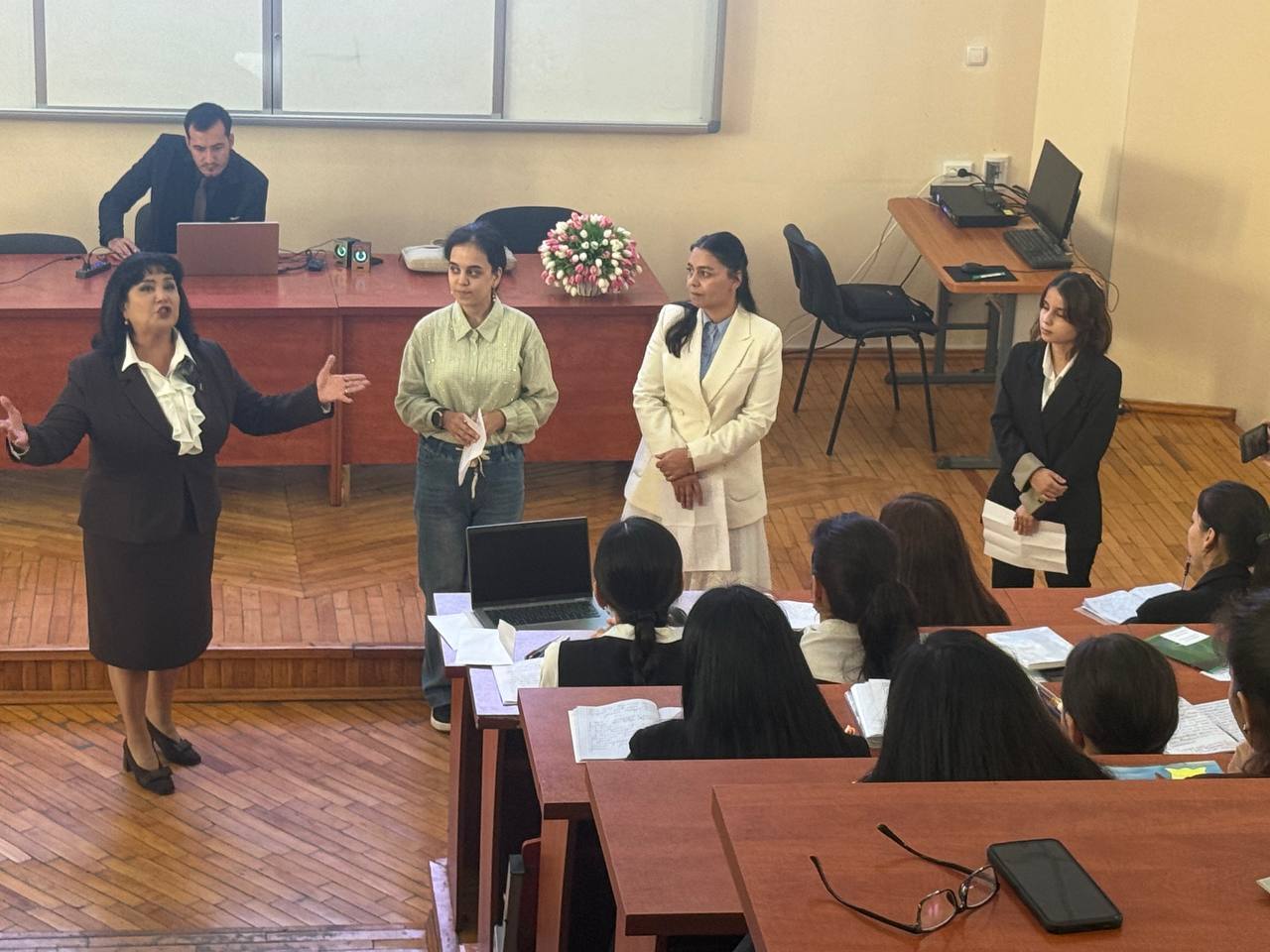
The students performed dramatized scenes reflecting the central ideas of the novel and the inner worlds of its characters. Their active participation throughout the lesson was encouraged and supported by the instructor.
At the conclusion of the lesson, the professors and teachers who participated both online and in person highly appreciated the organization of the session and particularly noted its high scientific, pedagogical, and methodological level.