

Free drinking water provided
TIIAME
National Research University: A Model of Sustainability Through Free Drinking
Water
At
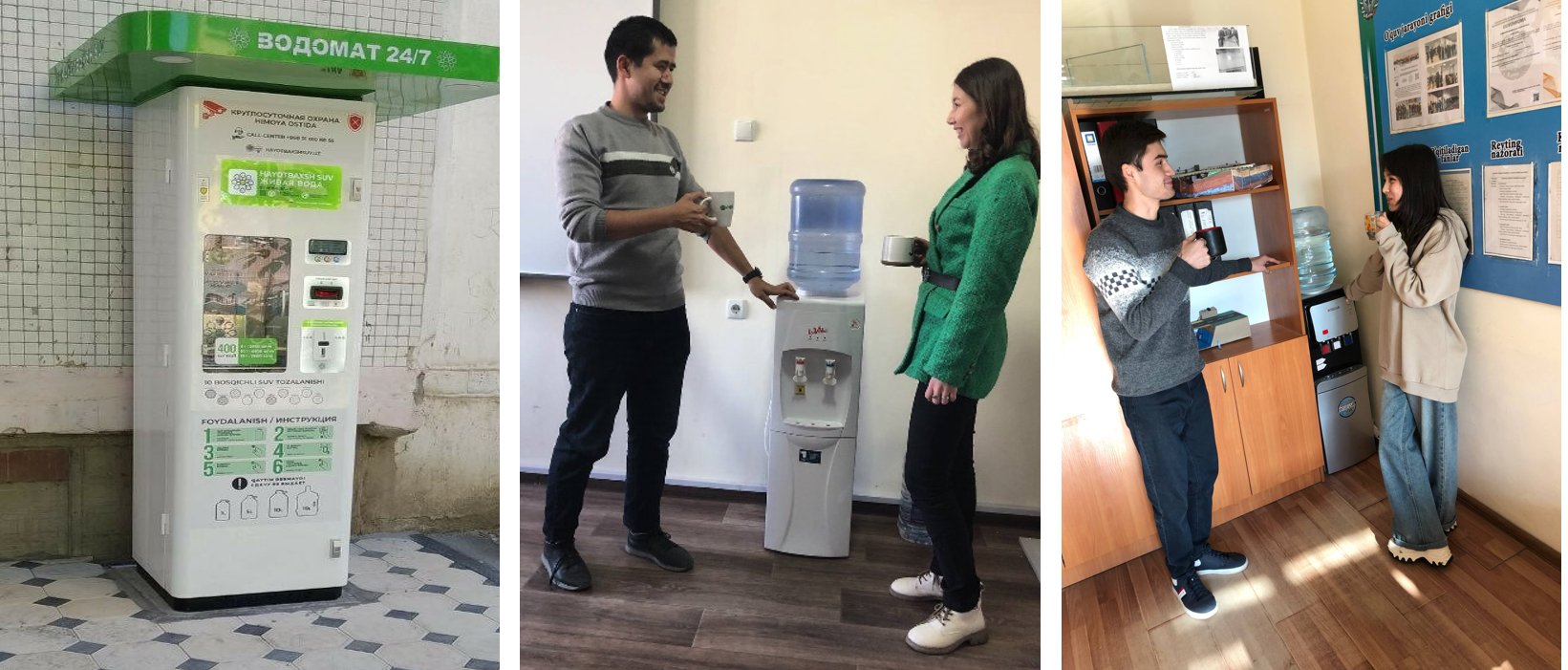
TIIAME National Research University, free drinking water is continuously
provided for all students, staff, and visitors across the campus. The system is
managed in accordance with national standards on drinking water hygiene and
monitoring and aligns with the principles of SDG 6 (Clean Water and
Sanitation). This initiative integrates plastic waste reduction, health
protection, and the promotion of an inclusive and sustainable environment.
Infrastructure
and Coverage
Across
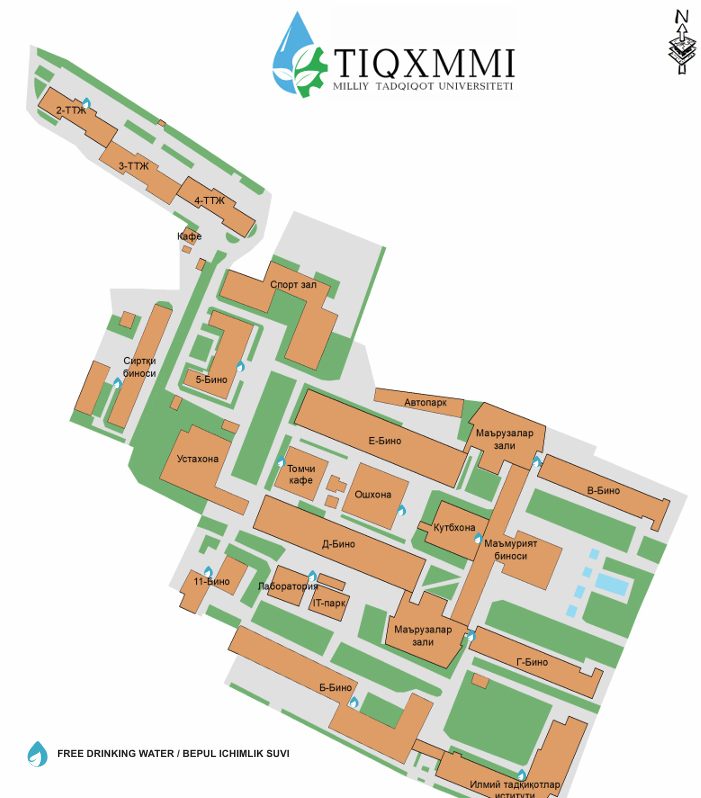
the university campus, 12 refill stations operated throughout 2024. These
points cover academic buildings, libraries, dormitories, sports facilities, and
event areas. According to the 600-800-meter coverage criterion, 90 % of the
main buildings have direct access to a free drinking water point.

Quality
control & safety
Drinking
water quality is monitored monthly. In 2024, laboratory testing covered pH,
TDS, turbidity, residual chlorine, and E. coli. Results show that 100% of
samples fully complied with national hygiene standards. Test protocols and
inspection dates are published on the university’s public page.
Environmental
impact (plastic reduction)
TIIAME
NRU actively promotes the “Bring-Your-Bottle” campaign, expanding the use of
refillable bottles among students and staff. This practice reduces single-use
plastic consumption, cuts waste streams, and supports responsible water use,
strengthening the university’s sustainable campus model.
Maintenance
& rapid response
Each
water point follows a preventive service plan: timely filter replacement, unit
disinfection, and pressure calibration are performed on a routine basis. Under
the SLA (Service Level Agreement), faults are addressed within 36 hours.
Processes are overseen through internal audits by TIIAME’s technical units. QR
codes at every station allow users to report faults or supply issues directly;
the current average response time is 36 hours.
Educational
& social impact
Beyond
supporting healthy lifestyles, the free drinking water initiative actively
builds a culture of sustainability on campus. Throughout 2024, more than ten
awareness and engagement events promoted wise water use, plastic reduction, and
recycling, while connecting classroom learning with real-world water
challenges. Students are increasingly adopting refill habits and
environmentally responsible behaviors, reinforcing TIIAME’s Green Campus agenda
and SDG 6 outcomes.
Selected
2024 evidence of outreach & engagement (public links):
1.
Integration of production and education in river hydrology (19 January 2024)
On 19 January 2024, the Department of Hydrology of Rivers and Reservoirs
organised a seminar-training on integrating production and education in water
management. Representatives of river basin and water-management organisations
met with students and faculty to discuss real hydrological challenges and
modern monitoring practices. Participants gained a clearer understanding of how
theoretical knowledge is applied in practice, strengthening the link between
the university and the water sector.
URL:
https://tiiame.uz/news?id=5362

2.
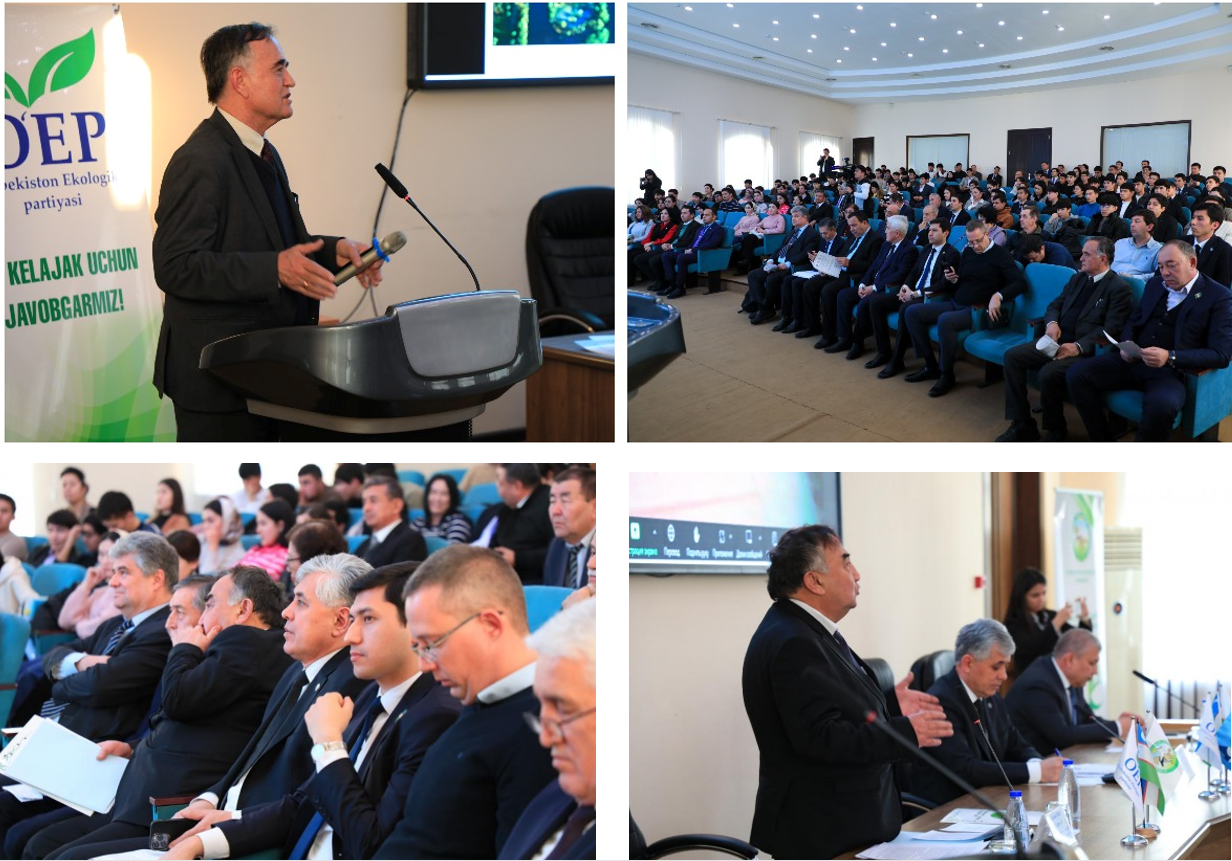
World Wetlands Day round-table with national decision-makers (2 February 2024)
On
2 February 2024, in connection with World Wetlands Day, TIIAME NRU
students and staff took part in a public round-table held in Tashkent on the
role of wetlands, the Aral Sea region and climate resilience. The event
featured Mr. Alikhanov Boriy Botirovich, Chair of the Senate Committee on the
Development of the Aral Sea Region and Ecology, who led discussions on wetland
conservation and sustainable water use. The meeting raised environmental
awareness among students and highlighted the importance of healthy water
ecosystems for regional development.
URL: https://tiiame.uz/news?id=5500
3.
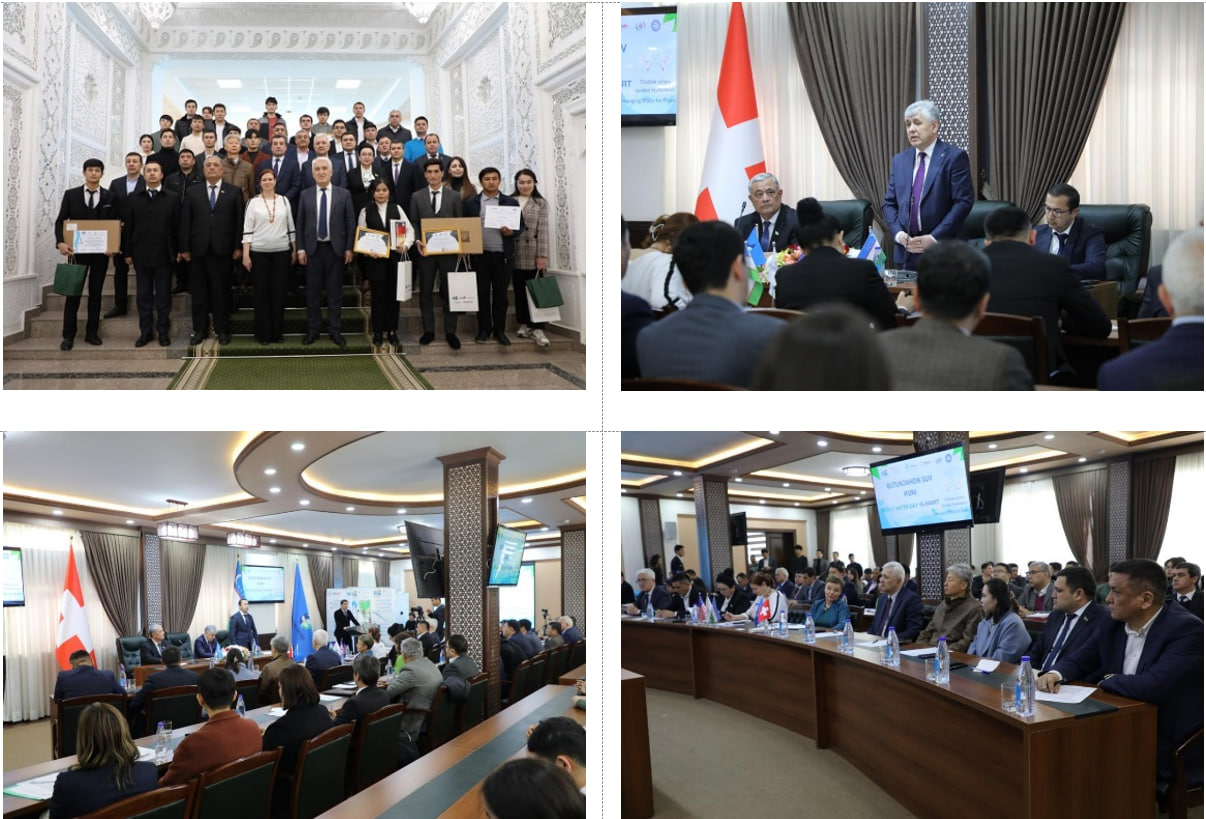
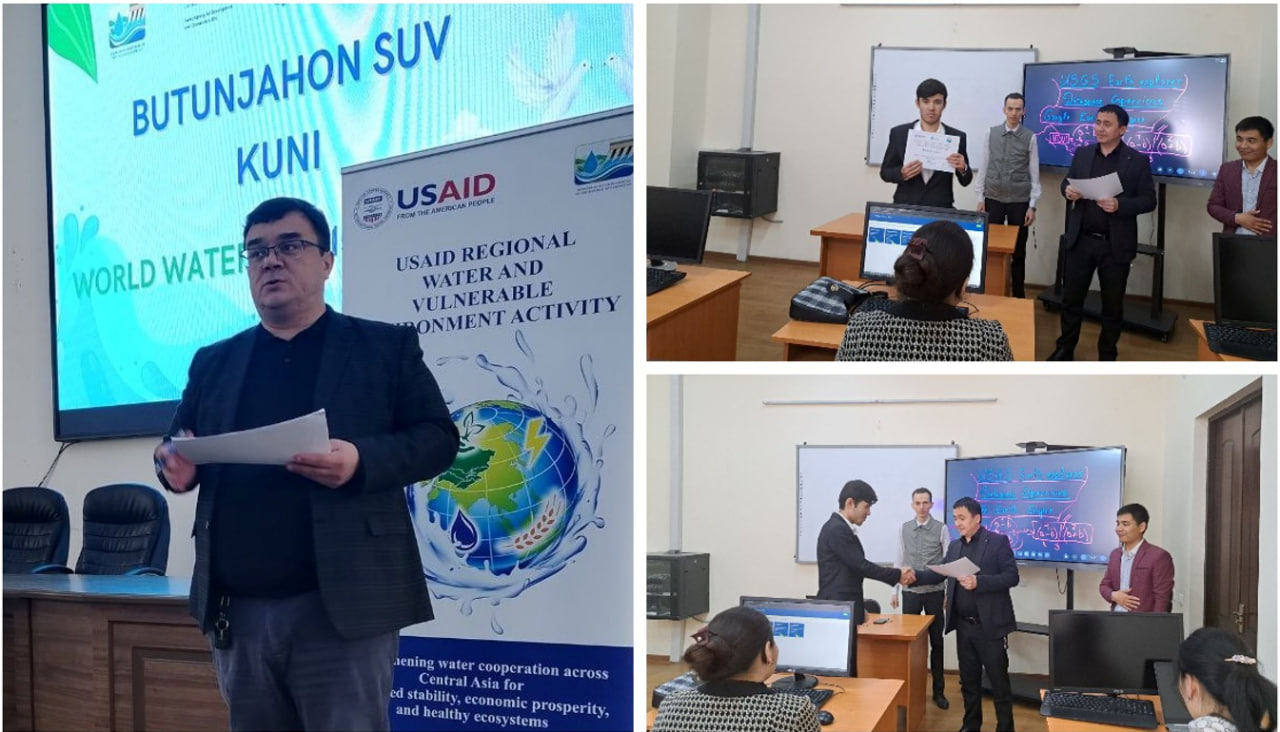
World Water Day event “Water for Peace” (15 / 22 March 2024)
Around
World Water Day (22 March), TIIAME NRU
organised a dedicated event on 15 March 2024 to discuss “Water for Peace” and
the growing pressures on freshwater resources. Faculty members, students and
invited experts addressed water scarcity, transboundary water issues and the
need to pass river water resources to future generations in good condition. The
programme combined presentations, discussions and an exhibition on sustainable
water use and SDG 6.
URL: https://tiiame.uz/news?id=5871
4.
Quiz on the topic “Water for Peace” (13 March 2024)
On
13 March 2024, a student quiz on “Water for Peace” was held in the foyer
of the G-building. Teams of students answered questions on global and national
water issues, SDG 6, climate change and conflict-sensitive water management.
The event encouraged peer learning, raised awareness of the links between water
security and peace, and rewarded the most active and knowledgeable participants
with honorary prizes.
URL:
https://tiiame.uz/news?id=5932
5.
“Smart Irrigation” innovative project competition (28 March 2024)
On
28 March 2024, the university launched an innovation competition under the
title “Smart Irrigation – an innovative project to improve water resource
management.” Students and young researchers were invited to propose
sensor-based, IoT and data-driven solutions for efficient irrigation and
reduced water losses. The competition served as both an educational platform
and a pre-incubator for water-saving technologies, encouraging participants to
turn research ideas into practical prototypes.
URL:
https://tiiame.uz/news?id=5993

6.
Public lecture on automatic water-control systems for efficient water use (23
April 2024)
On
23 April 2024, the Faculty of Hydromelioration hosted an online and offline
public lecture on “The importance of automatic water control for efficient
water use.” The lecture brought together professors, doctoral students,
researchers, master’s students and undergraduates to learn about modern
automatic control systems for canals and pumping stations under conditions of
water scarcity. The speaker presented real case studies and demonstrated a
pilot device, sparking discussion on how such technologies can be implemented
on campus and in the national irrigation network.
URL: https://tiiame.uz/news?id=6190
